
Trump Plays a Game of Chicken with Markets, and Everyone Loses
Trump’s Tariff Tussle Drives Markets into a Ditch
As the global economy teeters on the brink of uncertainty, President Donald Trump’s trade war continues to wreak havoc on markets. Less than two months into his term, Trump has now driven the stock market into a ditch, leaving investors scrambling to gauge the extent of the damage.
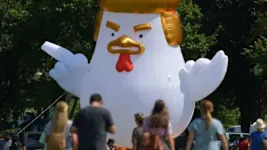
The game of chicken, where two drivers speed toward each other until one loses their nerve and swerves off the road, is an apt analogy for Trump’s approach to trade. In this version of the game, everybody sustains some damage. Trump has been testing the tolerance of financial markets since his first day in office by disassembling government agencies, canceling federal spending, and mounting a trade war with numerous economic partners.
Investors have been trying to gauge how disruptive Trump will ultimately be and whether he’ll cause temporary or lasting damage. The stakes grew considerably the week of March 3, when Trump announced another 10% tariff on Chinese imports and a much stiffer 25% tax on imports from Canada and Mexico.
The Market Buckles
America’s northern and southern neighbors are its largest trading partners, and the 25% tax would sharply raise the cost of nearly $1 trillion worth of goods, including cars and car parts, food, construction materials, and energy. The stock market buckled in response, with Trump promptly beginning to backtrack on the North American tariffs.
However, investors are now pricing in more damage from tariffs than they were a few weeks ago, along with rising odds of a recession. The S&P 500 lost 3.5% the week of March 3, with Trump’s retreat on tariffs doing little to calm markets. US stocks are underperforming those in Europe and many other markets.
Investor Views Sour
Investor views of Trump’s economic plans are rapidly souring. "Trump tariff push descends into farce," Capital Economics declared in a March 7 analysis. "For those keeping score, Trump has now imposed tariffs on Canada and Mexico then almost immediately performed a full U-turn twice in a month." The research firm points out that since Trump’s reprieve is only supposed to last until April 2, more lurches are probably coming.
The Fed Put
The stock market sell-off would probably be worse if not for the "Fed put," a widespread belief that the Federal Reserve will resume stimulative interest rate cuts if a recession appears imminent. In a March 7 speech, Fed Chair Jerome Powell sounded chill, saying the economy is "fine" and suggesting the Fed doesn’t see much of a need to do anything at the moment.
The Trump Put
There’s also supposed to be a "Trump put," in which a market-friendly Trump intervenes himself if markets get too wobbly. That may still arrive in the form of a set of tax cuts the Republican-led Congress is likely to pass by the end of the year. However, for now, Trump seems unperturbed by the prospect of a little pain in markets or even a hit to his own standing with voters.
Employment Report
The employment report that came out on March 7 was reassuring, on the surface. Employers added 151,000 new jobs, which is slower than the 2024 pace of job growth, but still in the normal zone. However, many economists warn that the February survey captured barely any of the federal layoffs Trump and his axman Elon Musk are executing as they ransack the government agency by agency looking for savings.
A Troubling Future Ahead
"What looms ahead is troubling for the labor market," economist Bernard Baumohl of the Economic Outlook Group wrote in a March 7 analysis. "Many companies have set up war rooms to assess how Trump 2.0 will affect their operations. Are we going to see a coherent economic and political strategy emerge from the White House? Or is the nation about to labor through four years of essentially a bar room brawl?"
Conclusion
As the global economy teeters on the brink of uncertainty, President Donald Trump’s trade war continues to wreak havoc on markets. The stock market sell-off would probably be worse if not for the "Fed put" and the supposed "Trump put." However, investors are now pricing in more damage from tariffs than they were a few weeks ago, along with rising odds of a recession. The future ahead is uncertain, but one thing is clear: Trump’s tariff tussle has driven markets into a ditch.
