
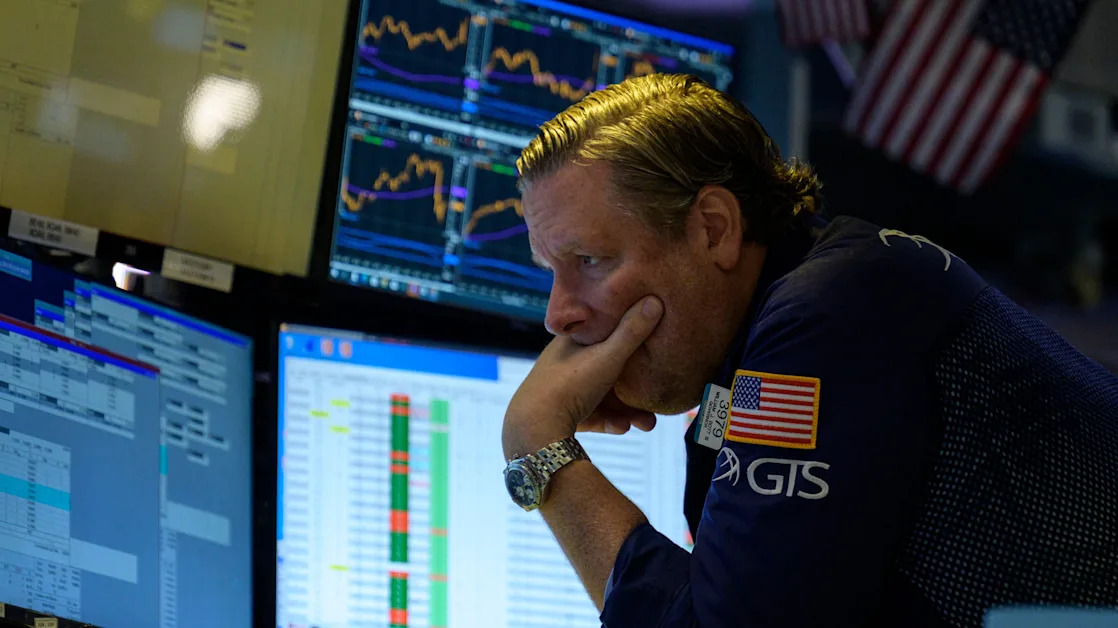
Turmoil in the US is boosting global markets — but the chaos could still spread, Goldman Sachs warns

The recent stock market rout in the US has benefited equities elsewhere as investors rotate investments — but their long-term gains could still hinge on the American economy.
Last week, the US stock markets saw a brutal selloff over fears of a
recession.
The
S&P 500
is down 4% and the
Nasdaq Composite
is down 8% so far this year.
In contrast, the
Euro Stoxx 50 index
is 10.4% higher year to date, especially after
Germany and Europe
announced defense and government spending plans. Meanwhile, a
China tech rally
sent Hong Kong’s
Hang Seng Index
up 20% while the mainland’s
CSI 300
index has risen about 2%.
Such recent market moves mark an “unusual outperformance” for European and emerging markets stocks relative to the US, analysts at Goldman Sachs wrote in a Sunday note. But they said there are limits to the decoupling — especially if US economic activity and growth continue to decelerate and an American recession becomes a “real risk.”
“In those scenarios — where the US catches a bad cold — tighter financial conditions and higher risk aversion tend to spill over into global markets as well,” they wrote.
The analysts wrote that markets in Europe and China have been swiftly boosted by the EU and Germany’s huge fiscal packages and AI developments, respectively. But if the US economy and markets weaken further, these other markets may need more supportive factors to continue their positive performance.
Goldman Sachs’ report comes after the recent cratering in US stocks sent investors looking for
market winners
elsewhere.
Meanwhile, the macroeconomic and market outlook for the US — the world’s largest economy, which accounts for about one-quarter of global GDP — remains uncertain as the second Trump administration appears to have a higher tolerance for
market turbulence.
On Sunday,
US Treasury Secretary Scott Bessent
told NBC News that there are “no guarantees” there won’t be a recession. He also said he was “not at all” worried about the volatile stock markets.
US President Donald Trump has also recently declined to rule out the possibility of a recession.
“The challenge is that because new policy announcements are still coming and because the timing of the impact of uncertainty is not clear, it may take time before the market can gain confidence that the economy is avoiding more lasting damage even if the data holds up,” the Goldman Sachs analysts wrote.
Read the original article on
Business Insider
