
Markets Flash Glimpses of Trump Fatigue as Tariff Risk Queried
(Bloomberg) — Growing speculation the new tariffs threatened by US President Donald Trump are mainly intended as a negotiating tool is undermining the popular trade of betting on the dollar.
Bloomberg’s gauge of the greenback slid to a two-month low Friday after Trump ordered his administration to consider reciprocal tariffs to rebalance trade relations, efforts that may take weeks or months to complete. That’s adding to the conviction the levies are more of a tactic to gain a better deal than an end in themselves, and reducing the prospect of quicker US inflation that has boosted the dollar.
“The fire hose of policy surprises and announcements has been so strong and created so much uncertainty,” said Idanna Appio, a portfolio manager at First Eagle Investments. “We’re starting to see there’s some exhaustion, people are not convinced by what’s potentially there.”
The Bloomberg Dollar Spot Index has dropped around 2.5% from February’s high as investors wind back bets that Trump is determined to ramp up global tariffs as part of his “America First” policy. The greenback has weakened against all its Group-of-10 peers this month, with some of the biggest losses against commodity currencies such as the Canadian and Australian dollars.
“FX investors are calling Trump’s tariff bluff and selling the dollar,” said Valentin Marinov, head of G-10 FX strategy at Credit Agricole.
The $300 billion-plus foreign exchange options market is flashing signs of dollar fatigue too. Traders cut their bullish wagers on the US currency for a fourth day Thursday, according to one-month risk reversals on Bloomberg’s US dollar gauge.
And data from the Depository Trust & Clearing Corporation suggest caution: options volumes dropped by around 20% this week.
“The dollar remains expensive, has poor fundamentals, and is entering a phase of public and trade policy uncertainty,” said David Chao, global market strategist for Asia Pacific ex-Japan at Invesco Asset Management. “I wouldn’t be a buyer of the greenback here.”
China Stocks
The delay in imposing higher US tariffs is also impacting other markets — bolstering global shares and emerging-market assets. S&P 500 futures edged higher in Asia, after the underlying index climbed 1% Thursday.
Chinese stocks had been widely expected to come under selling pressure due to Trump’s threat to slap punishing tariffs on imports from the Asian country, but the president has yet to follow through on his pre-election pledges.
The nation’s equities have been driven higher in recent weeks by Trump’s discussions with his Chinese counterpart Xi Jinping, and optimism over the country’s expanding artificial-intelligence capabilities.
“The risk is actually to the upside for China because some of this tariff risk is priced in,” Alison Shimada, head of the emerging-market equity team at Allspring Global Investments LLC, said on Bloomberg Television. “Investors and traders in China and Asia already kind of assumed a 60% tariff hike on day one, which didn’t happen.”
The Hang Seng China Enterprises Index has rallied more than 18% from its low in January, getting closer to topping an October peak that followed a stimulus blitz. Exceeding that level would take it to the highest since February 2022. The CSI 300 Index of mainland-listed stocks has jumped more than 5% from a low last month.
Currency Risk
Still, some investors are sticking to their pre-election bets, including expectations of a bullish dollar given the strength of the US economy. Others argue that the market still hasn’t priced the risk of tariffs actually being implemented, which could also push the currency higher.
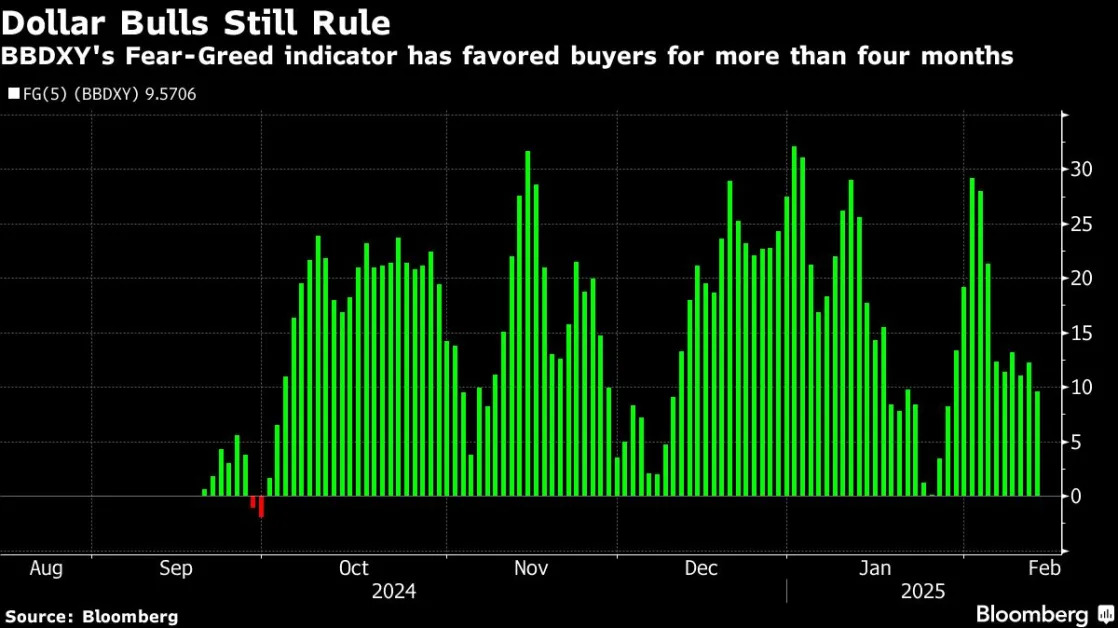
Hedge funds kept their bullish positions on the dollar near multi-year highs last week, according to data from the Commodity Futures Trading Commission. At the same time, a measure of momentum for Bloomberg’s dollar index, known as the fear-greed indicator, still shows a bias toward buyers, extending a streak that has lasted more than four months.
“I still think ‘peak tariff’ has not been reached yet,” said Carol Kong, a strategist at Commonwealth Bank of Australia. “Once markets realize Trump’s threats are credible and higher tariffs are imposed, the dollar will re-strengthen again.”
Others are growing less confident in further gains in the US currency. The dollar may well be in a declining trend if the belief that tariffs are just a negotiating tool becomes more entrenched, said Shoki Omori, chief global desk strategist at Mizuho Securities in Tokyo.
“Even though hedge funds and asset-manager positioning still favor a stronger dollar, there’s little doubt the latest developments are weakening some confidence in the currency,” he said.
–With assistance from Naomi Tajitsu, Alice Atkins and Liau Y-Sing.
(Adds comment in third and fifth graphs)
