
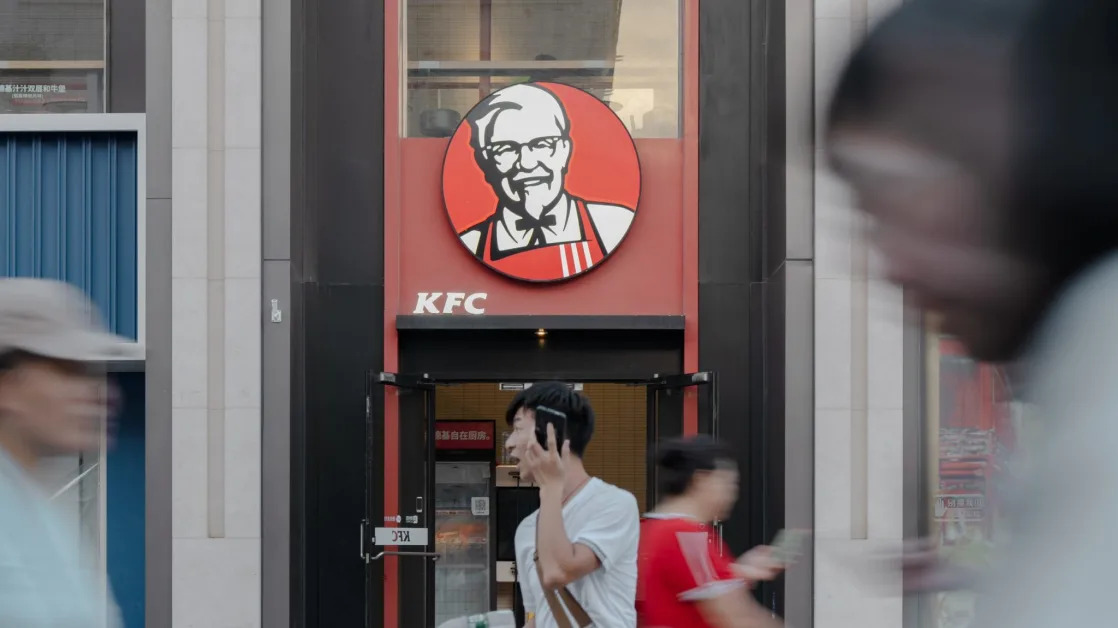
Cheap coffee and smaller pizzas help Yum China survive an uncertain consumer market
China’s economy still can’t shake
its consumption slump
. Retail sales in China
grew by 3.5%
in 2024, lower than the
headline growth rate of 5%
for the year, according to data from the National Bureau of Statistics.
Yet Yum China, which operates over 16,000 stores, including Chinese outlets of Kentucky Fried Chicken and Pizza Hut outlets, is finding growth in a tougher market. The company, No. 368 on the
Fortune 500
, managed to grow sales across both its directly-owned and franchised outlets by 5% in 2024, ahead of the broader industry. Yum China’s New York-traded shares jumped by 9.1% on Thursday, after the company reported resilient earnings and an increased dividend in its quarterly earnings.
CEO Joey Wat pointed to two “breakthrough models” in an earnings call with analysts on Thursday morning—KCOFFEE and Pizza Hut WOW—to explain the company’s success.
The former is a cut-price coffee chain attached to Yum China’s KFC outlets. Since debuting the brand in 2022, Yum China has rapidly expanded the coffee chain’s footprint across China. In July, Yum China opened its
200th KCOFFEE branch
in Hangzhou; that number has since more than tripled, with 700 outlets across the country.
Chinese consumers have flocked to cheap coffee chains like
Luckin Coffee
and Cotti Coffee. The affordable coffee, often
tailored to Chinese tastes
, has
eroded Starbucks’ business
in China, whose revenue from the country dropped 7% year-on-year last quarter.
Yum China launched Pizza Hut WOW in May, which
offers smaller, more affordable servings
for thrifty diners, including a pepperoni pizza for just 29 yuan ($4). “This kind of store is more for individuals, like a small plate of tapas,” a spokesperson told
Reuters
in early September.
The company now has over 200 WOW outlets across China. The lower-cost model is “very promising” for lower-tier cities in China, Wat told analysts on Thursday, yet acting CFO Adrian Ding cautioned that the model still needed time to “mature.”
Yum China on the Fortune 500
Yum China
posted $2.6 billion in revenue
for the final quarter of 2024, pushing its annual revenue to $11.3 billion, a record since the company’s spin-off in 2016.
Yum China is No. 368 on the Fortune 500, which ranks the U.S.’s largest companies by revenue. Yum China is one of a handful of companies on the ranking, alongside Coupang and Las Vegas Sands, that make almost all of their revenue outside of the U.S.
Yum China operates Kentucky Fried Chicken, Pizza Hut, and other fast food outlets in China. U.S.-based Yum Brands spun off its China operations into a separate company in 2016, creating Yum China. (Yum Brands just missed the Fortune 500 last year, coming in at No. 501.)
The fast food operator also posted $115 million in net income for the quarter, an 18% increase year-on-year. Annual profits came in at $911 million.
Yum China grew its store count (including those operated by franchisees) by 1,751 over 2024, bringing the total to 16,395 outlets across all of China. On Thursday, Yum China said it hoped to reach 20,000 stores by 2026.
Slumping consumption
China’s consumption slump hasn’t been felt equally across the economy. Foreign brands have been hit particularly hard, as Chinese shoppers shift towards domestic products that increasingly offer the same quality at a cheaper price. Starbucks,
Estee Lauder
and
Nike
have all reported falling sales in the China market.
Yum China has, in part, avoided this fate through aggressive localization, selling products tailored to local tastes, like an “
egg tart dirty coffee
” or a pistachio-stuffed crust pizza to celebrate Chinese New Year.
Another difference noted by economists is that
smaller cities
are now becoming hotspots of consumer activity, relative to major urban centers like Shanghai and Beijing.
“There’s still a lot of opportunity for us to expand the business…by going to lower-tier cities,” Wat told analysts on Thursday.
Chinese stocks rose
late last year
after Beijing signaled that it would offer more domestic stimulus, like a
trade-in scheme
for consumer electronics and home appliances, to jumpstart the economy. Yet the economy still faces headwinds like a
continued property crisis
and
new tariffs
from the Trump Administration.
