
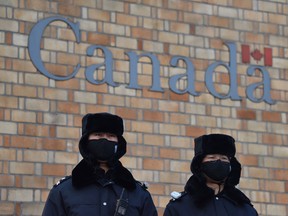
Canada is urging the United States to intervene in the dispute between the U.S. and China concerning Huawei.
Canada is increasingly turning to the United States for assistance in resolving a complex diplomatic and economic crisis stemming from the arrest of Huawei Technologies Co. Ltd. Chief Financial Officer Meng Wanzhou, a situation exacerbated by retaliatory measures taken by China. The arrest, which occurred in December on a U.S. warrant, has resulted in China imposing significant trade restrictions on key Canadian commodities, including canola, pork, and soybeans, while simultaneously detaining two Canadian citizens. The growing frustration in Ottawa centers around a perceived lack of support and decisive action from Washington, prompting calls for a more active role from the U.S. government.
The central issue lies in the repercussions of Meng’s arrest. Following her detention in Vancouver, Chinese authorities responded by blocking Canadian canola imports and, later, suspending permits for two major Canadian pork producers. Furthermore, Chinese police detained two Canadian citizens, intensifying the economic pressure on Canada and highlighting the interconnected nature of the crisis. This escalation demonstrates the significant leverage China holds due to the circumstances surrounding Meng’s arrest, underscoring the vulnerability of Canada’s crucial export sectors. The situation has rapidly evolved into a high-stakes diplomatic game.
Prime Minister Justin Trudeau’s government is expressing a heightened urgency for the United States to intervene meaningfully. Sources within the Canadian government have openly expressed concern that their requests for assistance are met with vague assurances or a reluctance to directly address the situation with China. A key complaint is the perceived lack of transparency from Washington regarding its intentions. Officials have pointed to the U.S. administration’s refusal to include the Huawei issue in ongoing trade negotiations as a critical failure to support Canada. The repeated assertion that “dealing with the Chinese is tough” has been viewed as dismissive and lacking in concrete support. Canada insists that the U.S., given its role in initiating the crisis through the arrest warrant, has an obligation to help.
The dynamics of the situation are further complicated by the political relationship between the Trudeau government and the Trump administration. Relations are considered formal at best, with the Canadian Prime Minister privately expressing skepticism about the current administration’s engagement. A significant point of contention stems from the former administration’s criticism of Trudeau’s leadership, dismissing him as dishonest and weak, a sentiment that continues to color the perception of U.S. cooperation. Moreover, the U.S. administration’s imposition of tariffs on Canadian steel and aluminum, initially justified on national security grounds, has added another layer of complexity to the dispute. Canada’s frustration is compounded by the lack of information surrounding U.S. plans for Meng Wanzhou, with questions lingering about potential negotiations for a plea deal, as suggested by U.S. officials.
Sources within the Canadian government have emphasized the practical difficulties of addressing the situation. They acknowledge the sensitive nature of requesting assistance, particularly considering the broader context of strained relations with the U.S. administration. A government source highlighted the public relations challenges involved in appealing to Canadians and the detained citizens, stating, “How do you go to canola farmers and relatives of the two (Canadian detainees) and say ‘Well, actually, notwithstanding all of this, we’re going to try and do whatever we can to help?’.” The inability to articulate a clear strategy with public support creates additional hurdles.
Adding to the complexities, discussions are ongoing about potential U.S. engagement with Meng Wanzhou, with some reports suggesting that authorities may be exploring possibilities for a focused approach. U.S. officials have not ruled out discussions regarding a potential plea deal. According to U.S. officials, the priority remains managing the trade repercussions of the arrest and negotiating a deal. However, communicating any strategy to the Canadian government has proven challenging. Canada’s ambassador to the United States, David MacNaughton, a veteran diplomat with extensive experience in navigating complex relationships, played a critical role in securing a new comprehensive trade deal with the United States last year, and is now actively promoting and championing Canada’s case to Washington.
The international implications of this situation are being observed closely by governments, and international organizations, and are playing a part in discussions in all of these relationships.
Ultimately, the crisis involves not just trade, but also an international legal case.
