
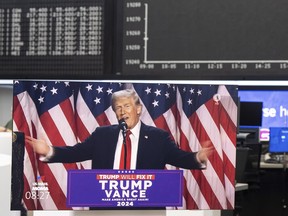
Trump Trade: Stocks Surge, Dollar Climbs as Markets React
From Dollar to Stocks, Trump Trade Erupts Across Markets
The global financial markets reacted with considerable volatility following the decisive victory of Donald Trump in the United States presidential election, ushering in a period of significant shifts driven by investor expectations of a policy environment markedly different from the preceding years. The immediate response, characterized by a surge in asset prices, particularly within the equity and currency markets, and an amplified interest in alternative assets like Bitcoin, reflected a collective bet that Mr. Trump’s policies would deliver substantial economic growth, boost corporate profits, and simultaneously fuel inflation. This reaction underscored a clear strategic alignment among investors and the anticipation of a resurgence in business-friendly regulations and protectionist trade policies.
The immediate impact on financial markets was profound. U.S. stocks experienced a notable surge, with futures for the S&P 500 climbing by approximately 2.3 percent. The U.S. dollar posted its largest gains against major currencies since 2020, while U.S. Treasury bonds experienced a sharp decline, leading to an increase in benchmark yields by nearly 20 basis points. Furthermore, the price of Bitcoin reached a record high, reflecting a surge in interest in digital assets fueled by Mr. Trump’s visible endorsement of them. These concurrent movements demonstrated a complex interplay of factors, primarily influenced by the anticipated economic repercussions of Mr. Trump’s agenda.
The initial market dynamics can be readily attributed to investor confidence in a return to policies long advocated by the former president. The expectation of tax cuts, deregulation, and protectionist trade measures—particularly tariffs—created an environment conducive to increased economic activity, heightened corporate profits, and a subsequent elevation of inflation expectations within the financial system. Investors anticipated that Mr. Trump’s policies would revitalize a sector of the economy that had been languishing under the previous administration.
Several key figures within the investment community offered insights into this unfolding situation. Strategist Ed Al-Hussainy at Columbia Threadneedle Investment Holdings Ltd. noted, “If you had the Trump trade on for the last six weeks, it’s been outstanding.” He further cautioned, “The question is, these winning runs don’t last forever and is this a good time to take profits?” This sentiment underscored the inherent volatility associated with the “Trump trade,” highlighting the potential for corrections as market sentiment shifted.
However, the market responses were not universally positive. Concerns regarding the potential consequences of Mr. Trump’s policies prompted a stern warning. The surge in Treasury yields underscored growing anxieties about the prospect of expanding the federal budget deficit as a result of increased government spending and the anticipated economic stimulus. Simultaneously, the rise in the break-even rate—a market gauge of expected inflation—signified a strong pushback against looser monetary policy. This indicated that market participants viewed Mr. Trump’s fiscal policies as likely to reignite inflationary pressures, thereby forcing the Federal Reserve to eventually tighten monetary policy more aggressively than previously anticipated.
The market’s immediate reactions extended beyond U.S. assets, significantly impacting global currency markets and commodity prices. The Mexican peso, widely considered the most vulnerable currency to Mr. Trump’s protectionist trade strategies, experienced its largest drop in three months, while the Chinese yuan weakened the most in two years. Similarly, the Japanese yen and the euro also experienced declines. These currency movements reflected the anticipated impact of trade wars and potential disruptions to global supply chains.
Commodity prices also exhibited considerable volatility. Oil prices decreased significantly, driven by concerns regarding potential disruptions to global supply chains and the uncertainty surrounding trade relations. Copper prices followed suit, as did gold, reflecting broader investor risk aversion. Soybeans, a major export commodity for Brazil and the United States, also displayed a sharp decline, fueled by fears of renewed trade tensions between the two nations. Bitcoin, championed by Mr. Trump, saw a record high, adding to its recent surge as investors bet on its potential as an asset fueled by his support.
Looking ahead, the market’s attention centered on whether the post-election market movements could sustain themselves. Investors were acutely aware of the inherent volatility associated with the “Trump trade” and the considerable risks associated with Mr. Trump’s agenda. The next crucial step was to observe whether the market’s behavior could extend beyond the initial reaction.
The investment community’s insights offered a nuanced perspective. Analyst Stephen Dover, chief market strategist and head at the Franklin Templeton Institute, cautioned, “I expect to see some profit taking on the Trump trade, and bottom feeders on the other side.” He also highlighted the potential for market corrections if the policy environment deviated significantly from expectations.
Ultimately, the unfolding market dynamics posed numerous questions for investors. The anticipation surrounding the post-election policies and the potential impact on the global economy remained a central theme, underscoring the delicate balance between optimism and caution within the financial markets. Bloomberg.com’s coverage, alongside further insights from analysts like Joel Leon and Andras Gergely, provided further context to this pivotal moment in financial markets.
