
China Prepares Retaliation Following US Blacklisting of Tech Giants
China has issued a strong warning, signaling a retaliatory response following the U.S. administration’s decision to place eight of its leading technology companies on a blacklist, citing alleged human rights violations against Muslim minorities in the Xinjiang region. The move represents a significant escalation in the ongoing trade and technology disputes between the two nations.
The foreign ministry spokesman, Geng Shuang, stated that the United States should “stay tuned” regarding China’s response, indicating a deliberate ambiguity while simultaneously asserting the nation’s resolve to defend its sovereignty, security, and development interests. Geng vehemently denied any government abuses of human rights in Xinjiang, framing China’s actions as fully compliant with domestic law and international practices. He accused the U.S. of harboring “sinister intentions.”
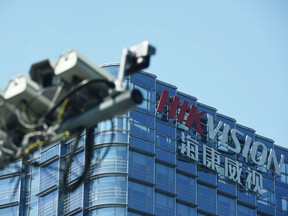
The blacklist, announced after U.S. markets closed, targets several prominent companies, including video surveillance giants Hangzhou Hikvision Digital Technology Co. and Zhejiang Dahua Technology Co., responsible for approximately a third of the global market for video surveillance. These companies have been implicated in the deployment of extensive surveillance systems throughout Xinjiang, where, according to human rights organizations and the U.S. government, as many as one million Uighurs have been detained in “re-education” camps.
Additionally, the U.S. Commerce Department placed on the “entity list” SenseTime Group Ltd., the world’s most valuable artificial intelligence startup, and Megvii Technology Ltd., a rapidly growing AI company aiming for a $1 billion Hong Kong IPO. Both companies are at the forefront of China’s ambition to dominate the AI sector. The Xinjiang region’s public security bureau and 18 other municipal and county public security bureaus, alongside the province’s police college, were also included on the list.
The U.S. action is rooted in a growing international outcry regarding the alleged human rights abuses in Xinjiang. The U.S. Commerce Department asserted that it “cannot and will not tolerate” the suppression of ethnic minorities within China. Secretary of Commerce Wilbur Ross emphasized that the measures are designed to ensure that U.S. technologies, fostered in an environment of individual liberty and free enterprise, are not used to repress vulnerable populations.
While the U.S. administration had previously considered this sanctions package, delaying its implementation due to ongoing trade negotiations, the move now represents a decisive step in escalating the trade war. Negotiators from both sides were already preparing for high-level talks scheduled to begin Thursday in Washington, and the blacklist adds another layer of complexity to the discussions.
The companies blacklisted face severe restrictions, including limitations on doing business with U.S. companies without obtaining a U.S. government license. Some companies have maintained relationships with banned companies through international subsidiaries, however. Hikvision and Dahua were suspended from trading Tuesday, while iFlytek Co., one of the eight singled out, slid 2.7 percent in Shenzhen.
Responding to the U.S. action, Megvii stated that it had “no grounds” to be placed on the list, noting that Human Rights Watch had corrected a report implicating the company. It further indicated that it hadn’t earned revenue from Xinjiang during the first part of the year and that the impact of the designation on its business was minimal.
The blacklist comes as President Donald Trump faces mounting pressure domestically to support pro-democracy protests in the Chinese-controlled territory of Hong Kong. The U.S. administration had postponed a speech by Vice President Mike Pence, planned for the anniversary of the Tiananmen Square massacre, to secure a meeting with Chinese leader Xi Jinping in Osaka, Japan. This delay showcased the intertwined nature of the trade war and geopolitical tensions between the two nations.
Bloomberg Economics Chief Economist Tom Orlik suggested that a mini-deal between the U.S. and China could be a potential reprieve for both economies, but the current stalemate appears less likely.
This situation highlights the potential risks of economic weaponization and underscores the complexities of navigating geopolitical disputes, especially when they involve human rights concerns. The actions taken by both the U.S. and China could have far-reaching consequences for the global technology sector and the broader international economy.
