
U.S. Labor Unions File Initial Complaint Under USMCA Regarding a Mexican Factory
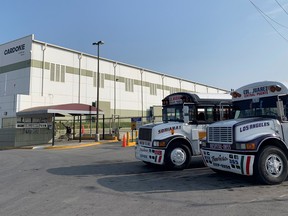
The American Federation of Labor and Congress of Industrial Organizations (AFL-CIO), the nation’s largest labor union, has filed a formal complaint against a Mexican auto-parts factory, Tridonex, marking the initial test of the enforcement mechanisms within the newly implemented United States-Mexico-Canada Agreement (USMCA). This action represents a significant step in holding Mexico accountable for upholding labor standards and reflects longstanding concerns from U.S. unions regarding conditions within Mexican factories operating under the North American Free Trade Agreement (NAFTA). The complaint centers on allegations of intimidation and suppression of workers’ rights at the Tridonex facility located in Matamoros, Tamaulipas, Mexico. U.S. labor groups argue that the actions taken by the factory, a unit of Philadelphia-based Cardone Industries Inc., constitute a violation of USMCA’s commitments to promote worker protections and collective bargaining.
The complaint highlights a troubling pattern of behavior, most notably the imprisonment of Susana Prieto Terrazas, an independent trade-union lawyer, for approximately one month in June of last year. Prieto’s legal work involved attempting to organize employees at the Tridonex plant. Following her release, she was subjected to internal exile to another Mexican state and placed under a ban preventing her from appearing in labor court. The AFL-CIO and its affiliated organizations assert that this treatment exemplifies a broader effort to stifle union organizing and suppress workers’ rights within the factory. The incident underscores the challenges of ensuring effective enforcement of labor standards under a new trade agreement.
Joining the AFL-CIO in this complaint are several other prominent unions, including the Service Employees International Union (SEIU), the Sindicato Nacional Independiente de Trabajadores de Industrias y de Servicios Movimiento (SNITIS), and Public Citizen. These organizations collectively represent a broad coalition of labor advocates dedicated to promoting fair labor practices and worker protections. The involvement of these diverse groups emphasizes the significance of the issue and the widespread concern over the conditions at the Tridonex facility. The rapid-response mechanism, a key element of USMCA, was designed to provide a tool for addressing such instances of labor rights violations.
The allegations against Tridonex extend beyond the case of Ms. Prieto. U.S. labor officials claim that the factory has actively suppressed workers’ attempts to form a union and engage in collective bargaining. This tactic, they allege, directly contradicts the intent of USMCA, which was intended to level the playing field between U.S. and Mexican manufacturers. The impact of these alleged actions, according to the unions, has resulted in the loss of numerous good-paying manufacturing jobs for workers in Philadelphia, along with similar threats to employees in Matamoros.
“USMCA requires Mexico to end the reign of protection unions and their corrupt deals with employers,” stated AFL-CIO President Richard Trumka in a released statement. “The ongoing harassment of Susana Prieto and SNITIS members is a textbook violation of the labour laws Mexico has pledged to uphold.” The unions are advocating for thorough and impartial investigations into the allegations and for immediate action to protect workers’ rights at the Tridonex facility.
SEIU International President Mary Kay Henry added, “Tridonex’s suppression of workers’ rights has cost our members in Philadelphia hundreds of good manufacturing jobs, and now they’re doing the same to workers in Matamoros. USMCA requires Mexico to enforce its labour laws and the rapid-response mechanism was designed to ensure facility-specific enforcement opportunities to help workers here at home and in Mexico who want to join together in unions, have safe workplaces, and raise their families with dignity.” The case highlights the complexities of trade agreements and the ongoing need for robust mechanisms to safeguard worker’s rights.
