
Aggressive Rate Hikes Fail to Curb Inflation: Is Monetary Policy Losing Its Way?
Central banks across the globe have been aggressively raising interest rates at the fastest pace since the 1990s, yet the generationally high inflation that has gripped economies remains stubbornly persistent. Faced with a complex and evolving economic landscape, policymakers are grappling with the challenge of bringing inflation back to their target levels—typically around two percent—while avoiding a deeper economic downturn. The situation highlights a fundamental shift in the dynamics of monetary policy and raises questions about its effectiveness in the current environment.
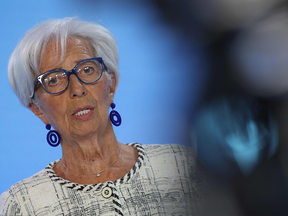
The rapid and coordinated action of central banks, including the U.S. Federal Reserve, the European Central Bank, and the Bank of England, began less than two years ago. Since then, borrowing costs have increased significantly, but the impact on consumer spending and business investment has been surprisingly resilient. This resilience is fueled by several factors, including a shift in the composition of economic output and persistent labor market tightness. The U.S. Federal Reserve chairman, Jay Powell, and the President of the European Central Bank, Christine Lagarde, have both cautioned that inflation will likely remain above their target for an extended period, potentially stretching well into 2025. These assessments underscore the difficulty central bankers are experiencing in rapidly neutralizing inflationary pressures.
One key element contributing to the sluggish effect of rate hikes is the significant lag time inherent in monetary policy. The impact of a single interest rate adjustment doesn’t fully transmit into the economy for approximately 18 months. Central banks initiated their rate-hiking cycles less than two years ago, and those increases were only recently beginning to exert a noticeable influence. This delay—coupled with the substantial size of the economic changes already underway—has created a situation where the initial rate increases are insufficient to fully restrain inflationary impulses. Furthermore, policymakers contend that the effects of monetary tightening may be even longer delayed and less potent than observed in previous decades.
Several structural changes within economies are also playing a role in complicating the central banks’ efforts. The composition of economic output has shifted, with the services sector—which is less sensitive to interest rate fluctuations—now accounting for a larger share of economic activity, particularly in the U.S. and other major economies. This shift reflects a broader structural transformation away from manufacturing towards services, a trend that has characterized global economic development for several decades. The services sector requires less capital investment, making it less susceptible to the dampening effects of rising borrowing costs. Moreover, the persistence of tight labor markets—characterized by ongoing labor shortages, especially in the services sector—is sustaining wage growth and fueling further inflationary pressures. Central bank president Christine Lagarde has highlighted this phenomenon, noting that companies in the services sector may be “labour hoarding,” anticipating future demand and reluctant to reduce staffing levels.
The duration of the pandemic’s economic impact and its lingering effects on labor markets are also crucial considerations. Widespread labor shortages observed across numerous sectors—again, particularly in services—have elevated wage growth, contributing directly to inflationary pressures. This is compounded by a shift in demographics and an expanding workforce. The persistence of these labor market dynamics means that central bankers are facing a significantly more complex challenge than they encountered during the earlier stages of the inflation crisis.
The ability of monetary policy to effectively combat inflation is further complicated by the substantial delays and increased uncertainty surrounding economic forecasts. Initially, many central bankers were overly optimistic about the timeline for bringing inflation back to target, leading to a delayed recognition of the evolving risks. These delays have potentially exacerbated the issue by allowing inflationary expectations to become more entrenched. Moreover, the considerable economic disruption underway—including shifts in supply chains, changes in consumer behavior, and geopolitical tensions—has created a volatile environment where accurate forecasting is exceedingly difficult. The risk exists that a prolonged period of high inflation could become normalized, making it more challenging for central banks to restore price stability.
The evolving dynamics of the housing market are also playing a significant role. In several countries, including the United Kingdom, the share of households owning their properties outright or renting has risen, reflecting a shift away from homeownership. Furthermore, a higher proportion of mortgage holders now have floating-rate mortgages, which are directly exposed to interest rate changes. Given that the UK’s share of households with a mortgage has declined from 40% in the 1990’s compared to less than 30% currently – and the increase in those on floating rate mortgages – these changes significantly impact the transmission of monetary policy. Andrew Bailey, Governor of the Bank of England, emphasized that these trends would delay the impact of interest rate increases, stating that “the transmission of monetary policy is going to be slower as a result.”
The challenges facing central banks are compounded by the broader macroeconomic environment. The combination of supply chain disruptions, elevated commodity prices, and geopolitical uncertainty has created a highly volatile economic landscape. These factors contribute to inflationary pressures and complicate the task of monetary policy. Moreover, broader concerns over the financial system and rising interest rates have weighed on bank balance sheets, adding another layer of complexity to central banks’ decisions. The recent collapses of several mid-sized U.S. lenders and the troubles of Credit Suisse Group AG serve as stark reminders of the vulnerabilities within the financial system and the potential for monetary policy to exacerbate financial instability. If growth weakens significantly, economists increasingly believe central banks will face even greater pressure to increase borrowing costs, which could push major economies into recession. Jennifer McKeown, Chief Global Economist at Capital Economics, now forecasts that most advanced economies will experience a recession in the months ahead.
