
Central Banks Urged to Brace for Persistent Supply Shocks
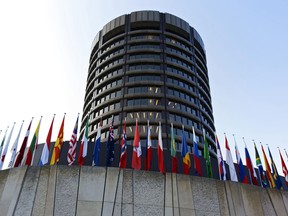
Central banks globally are being urged to prepare for a sustained period of “supply shocks,” according to a warning issued by the Bank for International Settlements (BIS). BIS Deputy Manager Andréa M. Maechler, in a speech delivered at the London School of Economics, stated that the economic landscape is shifting, presenting a greater risk of these shocks and reduced supply elasticity. This means that changes in supply – such as disruptions to production or distribution – are likely to have a more significant and prolonged impact on inflation than previously anticipated. The BIS cautioned that central banks will struggle to simply “look through” these supply shocks, necessitating adjustments to monetary policy.
Maechler’s concerns are rooted in a confluence of evolving global forces. Geopolitical instability, trade dynamics, demographic shifts, and the ongoing green transition are all contributing to a more volatile economic environment. The ongoing conflict in Ukraine has undoubtedly exacerbated supply chain disruptions, while broader trade tensions continue to create uncertainty. Furthermore, aging populations in many advanced economies are creating labor shortages, impacting production capacity and potentially driving up wage costs. The transition to a green economy is also proving to be a bumpy process, with investments in renewable energy technologies still lagging behind the scale of the required shift, and the impacts of climate change – including extreme weather events – are already contributing to price volatility across sectors like food.
A key element of Maechler’s argument is that central banks were slow to react during the initial phase of the recent inflation surge in 2022. “With the benefit of hindsight, some have argued that central banks in many advanced economies were slow to react to the initial burst of inflation, anticipating that they would be able to look through it because it would be transitory,” Maechler explained. Recognizing this late response, central bankers are now positioning themselves for a more proactive approach to manage inflationary pressures resulting from supply-side factors. The difficulty lies in the fact that unlike demand-driven inflation, which can often be countered with interest rate hikes, supply shocks are inherently difficult to address through monetary policy alone.
Several specific trends are contributing to this heightened risk of supply shocks. Demographic shifts, specifically the decline in the working-age population relative to the overall population, are creating labor shortages and potentially increasing wage pressures. Alongside this, ongoing globalization trends are weakening the ability of countries to rely on international trade as a buffer against domestic inflationary pressures; a declining trend of global trade makes it harder to absorb shocks by importing goods from elsewhere. The green transition also presents a challenge, with investments in renewable energy still at a relatively early stage. Finally, the increasing frequency and intensity of extreme weather events, driven by climate change, are creating volatility in food prices, as vividly illustrated by the disruptions experienced in southern Europe and northern Europe in 2022–23.
The BIS’s warning underscores a critical shift in the operating environment for central banks. Successfully managing inflation in this new era will require not just relying on traditional interest rate tools, but also a greater awareness of and responsiveness to these evolving supply-side pressures. The challenge will be to calibrate policy appropriately, mindful of the potential for these shocks to persist and prolong inflationary pressures.
