
Mexico Threatens to Block New Trade Deal Over Tariffs
Mexico is approaching ratification of the updated North American Free Trade Agreement (NAFTA), but the process hinges on the United States lifting its tariffs on steel and aluminum imports, a move that remains uncertain. Mexican officials stress that the potential for ratification is inextricably linked to the removal of these tariffs, imposed by the Trump administration as part of Section 232 of U.S. trade law, and that the current NAFTA agreement would remain viable in the interim.
The central obstacle lies with the U.S. tariffs, initially implemented in 2018 on steel and aluminum products from Mexico and Canada, citing national security concerns. These tariffs significantly hampered trade relations and were a key point of contention in the renegotiation of NAFTA, now known as the United States-Mexico-Canada Agreement (USMCA). Mexico’s approach to ratification isn’t solely dependent on a swift resolution but rather on a clear path forward, acknowledging the complexities surrounding the ongoing trade negotiations.
A core element of Mexico’s strategy is aligning with Canada’s stance, which has consistently and publicly stated that the tariffs are “illegal and unjustified.” The Canadian government has repeatedly raised the issue with the Trump administration, emphasizing the detrimental effects of the tariffs on their economy. Meanwhile, both Mexico and Canada are keen to secure the updated USMCA, a deal that incorporates labor standards and other provisions designed to level the playing field between workers in the three countries, particularly in the automotive sector.
Mexican Deputy Trade Minister Luz Maria de la Mora underscored this alignment, stating, “With the agreement or without the agreement, this is something central to President López Obrador — strengthening workers’ rights and strengthening trade deals in Mexico.” She and other Mexican officials maintain that while the updated agreement represents the desired long-term outcome, Mexico is prepared to continue utilizing the existing NAFTA framework if the new agreement cannot be ratified promptly, due to the continued imposition of tariffs.
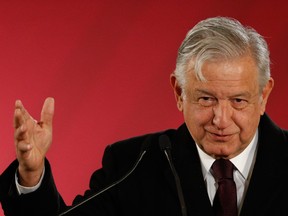
The current Mexican government, under President Andrés Manuel López Obrador, prioritizes strengthening workers’ rights and trade agreements in Mexico, a platform that fueled their rise to power. This dedication to enhancing worker protections directly contributes to Mexico’s willingness to continue with NAFTA while pursuing the updated USMCA. Sen. Antares Guadalupe, head of the Mexican Senate’s foreign-affairs committee, emphasized this commitment, stating “We are going to approve it, but right now our government is trying to deal with this (the tariffs).”
Adding to the complexity, the ratification process is further complicated by domestic political considerations within both the United States and Canada. The U.S. faces an uncertain political landscape, with the Trump administration nearing its end, while Canada’s House of Commons is scheduled to adjourn in June before the October federal election. These factors introduce delays and potential shifts in policy, making the timing of ratification increasingly uncertain. Sen. Hector Vasconcelos, the head of the Mexican Senate’s foreign-affairs committee, explained, “We have many things to do but we want to take it slowly because it is very important to have it in a very good way for Mexico.”
Despite these challenges, Mexican officials remain hopeful, stating, "Life goes on, I assure you,” regarding the current NAFTA, demonstrating a pragmatic approach focused on continued trade relations while actively pursuing the modernized agreement. The Mexican Senate’s approach reflects a desire for a carefully considered, ultimately successful ratification, recognizing the interconnectedness of the trade relationship with its North American partners.
