
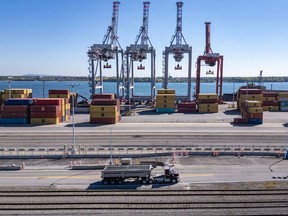
Montreal Port Strike Ends, Further Action Possible
Montreal — Following a three-day strike at two key terminals, the union representing Montreal dockworkers has reached an agreement, bringing an end to the work stoppage. However, the resolution doesn’t eliminate the possibility of further job action in the coming weeks, as underlying issues remain unresolved. The agreement, finalized early Thursday morning, impacts the Viau and Maisonneuve terminals, which handle more than 40 percent of container traffic at Canada’s second-largest port.
The Maritime Employers Association formally confirmed the cessation of the strike at 7:00 a.m., marking the end of a period of significant disruption to port operations. The union, affiliated with the Canadian Union of Public Employees, had initiated the work stoppage on Monday, resulting in a quarter of the port’s approximately 1,200 loaders and checkers being out of work. This action coincided with a broader walkout by dockworkers at dozens of ports along the U.S. East Coast and Gulf, effectively halting approximately half of the nation’s ocean cargo.
Union spokespeople expressed frustration with the employers’ stance during the negotiations. Michel Murray, a representative for the union local, described the employers’ behavior as dismissive, stating, “What is this employer up to? It denounces the effect of a partial strike on the economy and on the supply chain, but it doesn’t deign to come to the negotiating table to find solutions. It’s mind-boggling.” The union argued that the employers had consistently stalled the process despite offers of mediation. The lack of a sit-down meeting convened by federal mediators on Thursday deeply frustrated the union’s attempts to reach a resolution.
The Maritime Employers Association maintained that no formal meeting was scheduled and emphasized its continued commitment to negotiating a collective agreement. According to employer spokeswoman Isabelle Pelletier, the negotiations have been protracted, with the union submitting its response two months after employers initially presented a contract offer. She stated, “We are currently evaluating all the options available to arrive at a sustainable solution that reflects the reality of the situation.”
The Federal Mediation and Conciliation Service, responsible for facilitating the negotiations, did not respond to requests for information regarding the scheduling or cancellation of meetings. Samuelle Carbonneau, a spokesperson for the service, confirmed that mediators remain in contact with the parties and are continuing their efforts to assist them in facilitating a resolution. The prolonged stalemate underscores the difficulties in addressing the union’s concerns, which center around issues related to compensation, working conditions, and the broader impact of the strike on the supply chain.
The disruption caused by the strike is extending beyond Montreal, with manufacturers and food distributors expressing serious concerns about potential backlogs and stranded shipments, particularly in light of the ongoing U.S. dockworker action. The potential for weeks-long delays in the movement of goods, ranging from apples to auto parts, has prompted calls for proactive measures to mitigate the impact. The impact of the Montreal strike is part of a larger, unfolding scenario of disruptions within the North American supply chain.
Looking ahead, the possibility of further job action remains, as the union’s underlying concerns have not been fully addressed. The union will likely continue to evaluate the outcome of the current agreement and consider further action if its objectives are not met. The situation highlights the complex challenges facing the Canadian port sector and the potential for protracted labor disputes to significantly disrupt trade and the economy. The resolution represents a temporary pause, but the fundamental issues remain unresolved, potentially leading to a renewed confrontation.
