
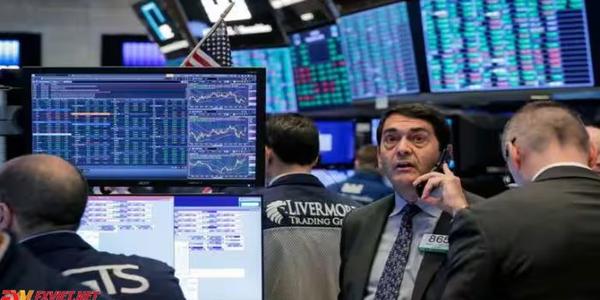
Stocks Surge Despite Tariffs and Federal Reserve Rate Cuts in 2025
The year 2025 presented a compelling, albeit somewhat unsettling, narrative for investors. Despite swirling concerns – fueled by President Donald Trump’s tariffs, anxieties about interest rates, and the burgeoning excitement surrounding artificial intelligence – the U.S. stock market not only weathered the storm but delivered a remarkable 18.3% return through December 11th, marking its third consecutive year of significant gains. This resilience underscored the surprising fortitude of the market and the adaptability of investors.
Record Returns Despite Market Turbulence
The final returns were a testament to the market’s ability to absorb significant shocks. The S&P 500 index funds, which form the backbone of many savers’ 401(k) accounts, achieved this record performance, largely due to a willingness from investors to stick with their investments through periods of intense volatility. While geopolitical tensions and trade disputes created a landscape of uncertainty – with Donald Trump’s sweeping tariffs initially triggering a nearly 5% plunge in the S&P 500 – the market ultimately rebounded, bolstered by a remarkable series of developments.
Trump’s Tariffs and the Market’s Reaction
Donald Trump’s imposition of tariffs in April, dubbed “Liberation Day,” initially sparked widespread fear. The tariffs, significantly more severe than many anticipated, prompted a nearly 5% drop in the S&P 500 and a subsequent 6% decline as China reacted with retaliatory measures, raising worries about a trade war. However, Trump’s administration swiftly responded, pausing the tariffs in April and subsequently negotiating agreements with countries to lower rates, assuaging investor anxieties. This demonstrated a surprising level of responsiveness within the White House and ultimately prevented a prolonged, debilitating downturn.
The AI Boom and Federal Reserve Cuts
Adding to the market’s buoyancy was the dramatic surge in interest around artificial intelligence technology. Fueled by substantial investments and groundbreaking advancements, the technology generated considerable excitement among investors. Simultaneously, the Federal Reserve implemented three cuts to interest rates, a move that further boosted market sentiment. This combination – the AI boom and lower rates – created a powerful bullish dynamic, contributing significantly to the market’s upward trajectory.
Global Market Divergences and Notable Performances
It’s important to recognize that the U.S. market wasn’t the only one experiencing gains. Several global markets outperformed the S&P 500. For instance, South Korea’s KOSPI enjoyed its largest gain in over two decades, driven by its technology hub status and the growing focus on AI investments. Japan’s Nikkei 225 also saw a double-digit gain for a third consecutive year, stimulated by national elections, a $135 billion stimulus package, and sustained interest in AI. European markets also benefited from favorable conditions, with Germany’s DAX bolstered by infrastructure and defense spending plans, and France’s CAC 40 achieving gains despite initial headwinds.
Cryptocurrency Volatility and Forward-Looking Concerns
Even the cryptocurrency market experienced a surprising degree of resilience. While Bitcoin initially dropped due to the effects of Trump’s trade policies, the asset rebounded dramatically, spurred by support from the White House and Trump family ventures. Retail investors flocked to Bitcoin ETFs, and companies like Strategy Inc. thrived on the cryptocurrency boom. However, as prices soared, the market corrected, with Bitcoin falling to around $89,400, reflecting concerns about overvalued assets and potential downside risks. Looking ahead, many professional investors anticipate continued gains in 2026, contingent on a healthy economy and the successful realization of AI’s potential. However, concerns remain regarding the potential for overvalued stocks, the sustainability of AI growth, and the possibility of reduced growth from companies cutting back stock buybacks or with central banks implementing fewer rate cuts.
