
U.S. Job Quits Hit Record High, Millions of Openings
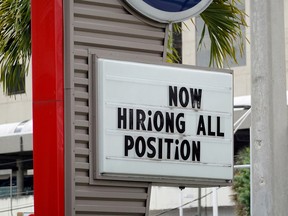
The U.S. labor market is displaying a concerning level of tightness, as indicated by a record surge in voluntary quits and a still-substantial 10.4 million job openings at the end of August. This situation, reflected in the monthly Job Openings and Labor Turnover Survey (JOLTS) report released Tuesday, is bolstering fears of sustained inflation and underscores the challenges facing the U.S. economy. The report reveals a persistently strong demand for labor, with workers choosing to leave their jobs at historically high rates, signaling confidence and a willingness to seek better opportunities.
The number of Americans quitting their jobs reached 4.3 million in August, marking a significant escalation from the previous month. This trend has been particularly pronounced in the South and Midwest regions, areas where the summer wave of coronavirus infections, driven by the Delta variant, disrupted activity in consumer-facing service industries. Correspondingly, vaccination rates lag in these areas, contributing to the ongoing challenges. The quits rate soared to 2.9 percent in August, up from 2.7 percent in July, indicative of strong worker confidence and a competitive job market. Economists generally view the quits rate as a barometer of job market confidence—a higher rate suggests companies are struggling to fill positions and may need to raise wages to attract and retain employees.
Despite a 659,000 decrease in job openings to 10.4 million, this figure remains a record high, nearly 49 percent above the pre-pandemic level. This substantial gap highlights the imbalance between the availability of workers and the number of jobs being advertised. The level of open jobs has spurred concerns about wage inflation, as companies increasingly compete to attract talent. Furthermore, the data shows a 224,000 decrease in vacancies within the healthcare and social assistance sector, 178,000 fewer openings in the accommodation and food services industry, and a 124,000 drop in state and local government education positions. Regionally, job openings declined in the Northeast and Midwest. The job openings rate decreased to 6.6 percent from 7 percent in July. Simultaneously, the September payroll numbers revealed a more modest increase of just 194,000 jobs, the smallest gain since December 2020, indicating a slowing in employment growth.
The tightness of the labor market was further evidenced by the National Federation of Independent Business (NFIB) Small Business Optimism Index, which revealed that 51 percent of small business owners reported being unable to fill job openings in September, a record high for the third consecutive month. This widespread difficulty in finding workers casts a shadow over the economic recovery. Hiring decreased by 439,000 jobs to 6.3 million in August, primarily concentrated in the accommodation and food services industry, where payrolls dropped by 240,000. Significant declines also occurred in hiring at state and local government education positions, and the Midwest region experienced a 4.3 percent hiring rate, down from 4.6 percent in July. Economists attribute the September payroll figures, alongside the continuing high number of job openings, to several contributing factors, including longer-term structural issues, such as workers in low-paying, variable-hour jobs within the leisure and hospitality sector who are hesitant to return to these positions, and the substantial savings accumulated during the pandemic, coupled with record stock market gains and house price appreciation. Senior Economist Lydia Boussour stated that the JOLTS report "continues to suggest that the labor market isn’t as loose as the current 5 million jobs shortfall would indicate."
The persistent labor squeeze has fueled concerns among policymakers about inflation and the Federal Reserve’s ability to manage it. The data adds to the debate surrounding the pace of future interest rate hikes. The extent of the labor market’s tightness could also influence discussions about the effectiveness of government-funded unemployment benefits, which were extended through early September and are now expired. Sophia Koropeckyj, a Senior Economist at Moody’s Analytics, noted that "longer-term issues remain as many people who worked in low-paying jobs with variable hours, particularly in leisure/hospitality, may be unwilling to go back to these types of positions.” The JOLTS report, alongside other economic indicators, paints a complex picture of a labor market that remains exceptionally dynamic and, for now, intensely competitive.
