
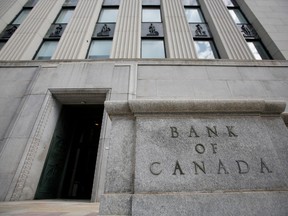
Bank of Canada Pauses Rate Hike, Awaits Economic Data
Ottawa — The Bank of Canada opted to maintain its key overnight interest rate at 4.50 per cent for a second consecutive month, a decision driven by a desire to gather further evidence regarding the impact of previous monetary tightening on economic growth and inflation, according to minutes released on Wednesday. This cautious approach reflects a prevailing sentiment within the central bank that more data is needed before any definitive conclusions can be drawn about the optimal path for monetary policy. The minutes reveal a nuanced assessment of the economic situation, acknowledging both the downward trend in inflation and the surprisingly robust nature of economic growth.
The governing council’s deliberations centered on the need for additional information. While headline inflation had peaked at 8.1 per cent last year and reached 4.3 per cent in March, the council recognized that achieving its target of two per cent inflation may prove challenging, particularly if monetary policy is prematurely eased. The minutes explicitly stated that “the case to maintain the policy rate at 4.50% reflected Governing Council’s view that headline inflation is coming down quickly in line with the Bank’s forecast and that more evidence would be needed to assess whether monetary policy was sufficiently restrictive.” This highlights a key principle of central banking: a reliance on data to inform decisions, rather than simply reacting to immediate economic trends.
A significant aspect of the council’s thinking was the unexpectedly strong growth observed in the Canadian economy. The minutes noted that growth had been “more robust than had been forecast in January,” a surprising development that tempered some of the urgency to lower interest rates. Equally important was the council’s concern about the tight labor market. The minutes revealed that “Governing Council acknowledged that the labor market was still tight and the slowing in growth would likely come a little later.” This suggests a recognition that wage pressures, stemming from a strong labor market, could continue to fuel inflationary pressures if interest rates were lowered too quickly.
Despite the downward trajectory of headline inflation, the council remained wary of potential inflationary risks. The minutes specifically pointed to concerns about “services costs” proving “sticky” and wages continuing to grow, driven by a tight labor market and stronger-than-anticipated growth in the first quarter. This focus on services inflation – which tends to be less responsive to interest rate changes than goods inflation – underscores the complexities of achieving the Bank’s two per cent target. The council’s projections anticipate Canadian inflation excluding food and energy costs remaining above three per cent until the fourth quarter of this year, indicating a prolonged period of elevated inflationary pressures.
The Bank of Canada’s decision to hold rates steady aligns with market expectations, but also reflects a growing divergence between market forecasts for a rate cut later in the year and the central bank’s own assessment. Market participants had anticipated a rate cut by the end of 2023, but the minutes clearly stated that “the Bank of Canada sees inflation falling to three per cent this summer, but it has said getting to two per cent may take time as services costs are proving sticky and wages continue to grow, in part because of a tight labor market and better-than-expected growth in the first quarter.” The council’s view suggests a more cautious approach to easing monetary policy, prioritizing a thorough evaluation of economic data before implementing any adjustments.
Ultimately, the Bank of Canada’s decision to maintain its current interest rate level exemplifies a strategy of patience and data dependency. The Council’s focus on robust economic growth, persistent services inflation, and a tight labor market demonstrated a willingness to take a measured approach to monetary policy. This reflects a central bank prioritizing a clear understanding of the underlying economic conditions before committing to a course of action, highlighting the inherent challenges in navigating a complex global economy.
