
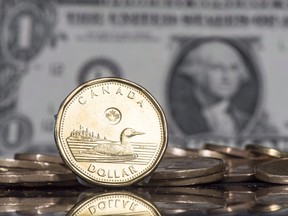
Canadian Dollar Weakens Despite Expected Rate Hike
Canada’s dollar has encountered a persistent obstacle in its path to stronger performance, even as Bank of Canada policy-makers prepare to initiate their first monetary tightening cycle in nearly five years. Despite predictions of upward movement, the loonie has struggled to gain significant traction. A key factor driving this recent underperformance is the global shift towards safe-haven currencies, accelerated by geopolitical uncertainty. Traders are increasingly seeking refuge in the United States dollar, particularly following Russia’s invasion of Ukraine. This influx of demand for the U.S. dollar is directly impacting the loonie, regardless of the Bank of Canada’s anticipated interest rate hikes.
The current dynamic is surprising, given the typical drivers of the loonie’s value. Crude oil prices have risen by 35 percent during the first two months of the year, and economists broadly anticipate a 25 basis point rate increase from the Bank of Canada this week. Furthermore, the prospect of a current account surplus should contribute positively to the currency’s prospects. However, these factors alone have not been sufficient to overcome the dominant pull towards the U.S. dollar, according to strategist Christian Lawrence at Rabobank. Lawrence noted that “I don’t really see anything domestically that’s likely to outweigh the impact of the safe-haven bid for the U.S. dollar and the oil story for the Canadian dollar.”
The loonie has declined approximately 0.9 percent against the U.S. dollar this year, largely trading within a range between 1.2670 and 1.2800 since late January, when Bank of Canada officials effectively signaled their intention to commence rate increases in March. This situation places Canada as the fourth advanced economy to adopt a policy of raising interest rates, preceding the Federal Reserve’s expected action later this month. Even with the Bank of Canada’s policy adjustments, it is anticipated that the loonie’s rally will be limited, as highlighted by Bipan Rai, head of foreign exchange strategy at CIBC.
The market’s pessimistic view of the loonie is reflected in the options market, where traders are increasingly bearish. Options traders are exhibiting a heightened preference for the U.S. dollar, with the put-to-call skew—representing the difference in hedging costs between bearish and bullish options contracts—reaching its strongest level since June 2020. Simultaneously, foreign exchange speculators have increased their short bets on the loonie to a significant extent, according to data from the Commodity Futures Trading Commission, marking the largest accumulation of short positions this year. This suggests a lack of confidence in the loonie’s future performance.
Bloomberg.com’s analysis further underscores this sentiment, with strategists at TD Securities articulating a cautiously optimistic outlook. They wrote that “With the Fed and BoC set to hike, we don’t see a huge swing factor for USDCAD,” while retaining a positive outlook for Canadian currency exposure against European crosses, primarily due to attractive carry, anticipated rate hikes, and favorable terms of trade. They also maintained a short position in the British pound (GBPCAD).
Despite forecasts indicating a generally positive outlook for the currency, anxieties are rising among market participants. The accumulation of short positions on the loonie signals growing concerns about its potential decline. The data confirms a significant shift in market sentiment, driven by broader global economic uncertainties and the compelling demand for the U.S. dollar as a safe-haven asset.
