
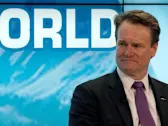
Bank of America CEO Sees Fed Rate Pause, Calls for Simpler Banking Rules
Bank of America CEO Brian Moynihan has expressed a cautious outlook regarding the Federal Reserve’s monetary policy, anticipating that the central bank will maintain its current interest rate levels throughout the remainder of 2024 and extend this stability into 2025 and 2026. Speaking at a conference in Washington on Tuesday, Moynihan acknowledged the protracted timeline required to fully mitigate inflationary pressures, stating that the Fed’s ongoing efforts to bring inflation down to the desired 2% target are likely to persist until 2026. This projection reflects a broader sentiment within the financial industry, as policymakers have maintained a steady course for interest rates while diligently working to achieve their inflation control objectives. The anticipation of prolonged rate stability underscores the complexities of navigating the economic landscape and the cautious approach being adopted by major financial institutions.
Fed Rate Outlook and Inflationary Concerns
Moynihan’s assessment is grounded in the considerable challenge of reducing inflation to the Fed’s target. He emphasized that eliminating inflationary pressures requires a sustained and deliberate effort, highlighting the extended timeframe anticipated for achieving this goal. The current environment, characterized by persistent inflationary pressures despite the Fed’s prior rate hikes, suggests that a more gradual and patient approach is warranted. Experts have noted that numerous factors, including global supply chains and consumer demand, continue to contribute to inflationary forces, making a swift resolution unlikely. Consequently, the expectation of rate stability until 2026 reflects a recognition of the entrenched nature of these challenges.
Regulatory Reform and Industry Advocacy
Beyond the rate outlook, Bank of America, alongside other financial institutions, is actively advocating for simplified U.S. bank regulations. CEO Moynihan echoed a common industry position, stating that a rational and consistent regulatory structure is crucial for the stability of the financial system and the ability of banks to serve their clients effectively. The industry’s concerns stem from the perceived instability of shifting policies across different presidential administrations, creating uncertainty for banks and their customers. The call for a more durable regulatory framework reflects a desire to move beyond reactive policy responses and establish a system that promotes long-term stability and predictability. This industry advocacy highlights a significant aspect of the current debate surrounding financial regulation.
Defense Against Political Accusations Regarding Account Closures
Bank of America and JPMorgan Chase are preparing to lobby the White House and Congress to defend themselves against accusations, primarily originating from former President Donald Trump and others, that they are systematically shutting down accounts of conservative customers on political grounds. These accusations, collectively known as “debanking,” have been a longstanding concern within the Republican party, alleging that Wall Street banks are engaging in “woke capitalism” by denying services to companies and individuals perceived as aligned with the political right. This includes accusations of denying services to gun manufacturers, fossil fuel companies, and other entities associated with conservative viewpoints. The industry’s proactive lobbying efforts underscore the seriousness with which these accusations are being viewed and the determination to demonstrate that account closures are based on legitimate business decisions and regulatory compliance rather than political bias.
Regulatory Burden and Anti-Money Laundering Compliance
A key focus of Bank of America’s regulatory discussions centers on the considerable burden placed upon the banking system related to anti-money laundering (AML), know-your-customer (KYC), and reporting requirements. These regulations necessitate extensive reporting of suspicious activity and require significant analytical effort, often leading to the closure of accounts. The banking system, particularly under these stringent requirements, must routinely close accounts, but often without the ability to explain the specific reasons to the affected customers. The industry argues that these regulations, while necessary for financial stability and combating illicit activities, are overly burdensome and create operational inefficiencies. The ability to provide clear explanations for account closures is a significant point of contention, as it’s perceived as a fundamental aspect of customer relations and trust.
Concluding Thoughts on the Banking Sector’s Position
The combined positions articulated by Brian Moynihan and the broader banking sector paint a picture of cautious optimism tempered by significant regulatory challenges and ongoing political scrutiny. The anticipated continued stability in interest rates reflects a realistic appraisal of inflation’s trajectory, while the advocacy for regulatory reform underscores the industry’s desire for a more predictable and sustainable operating environment. Simultaneously, the defense against politically motivated accusations demonstrates the heightened sensitivities surrounding financial institutions and the need for clear communication and transparent practices. Ultimately, the banking sector’s responses highlight the complex interplay between monetary policy, regulatory frameworks, and public perception within the U.S. financial system.
