
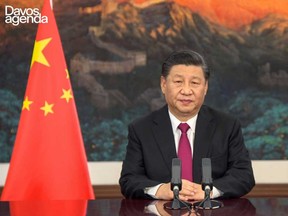
Xi Warns Against Cold War, Signals China’s Continued Path
President Xi Jinping delivered a significant address during the Davos Agenda event, signaling China’s determination to pursue its own course on the global stage while explicitly rejecting what he termed an “outdated Cold-War mentality.” The Chinese president’s remarks, made on Monday, underscored a desire for a less confrontational approach toward Western nations, particularly in the face of escalating tensions between China and the West. The core of his message centered on the need to abandon ideological divisions and “outdated thinking” in international relations, advocating instead for mutual respect and a return to multilateralism.
The speech was widely anticipated, representing Xi Jinping’s first address since Joe Biden took office, and addressed a number of key challenges facing global relations. Xi’s emphasis on avoiding “confrontation” directly countered criticisms leveled by the incoming U.S. administration, which has been vocal about concerns regarding human rights in Xinjiang, China’s trade practices and its role in the South China Sea. It was evident that Xi’s goal was to set a tone of diplomacy and to de-escalate the growing friction between the world’s two largest economies. Notably, he avoided directly referencing Biden by name, although the clear targeting of the new administration’s policies was undeniable.
A central theme running through Xi’s address was a plea for a return to “win-win” outcomes and a rejection of tactics such as “threats or intimidation.” He stressed the uniqueness of each country – advocating that “no two leaves are identical” – and argued against imposing a hierarchy on global civilization. This implicitly challenged the United States’ long-standing assertion of its role as the world’s leading power. Furthermore, he expressed a desire to re-establish high-level dialogue with the Biden administration, recalling his personal relationship with former President Trump, which began with a visit to Mar-a-Lago and led to official dialogue tracks that ultimately dissolved. Xi’s call for “enhanced political trust through strategic communication” highlighted a willingness to engage in direct discussions, a contrast to the more publicly confrontational rhetoric that characterized the previous administration.
The speech took place against the backdrop of China’s continued economic growth and its role as a global supplier, particularly during the COVID-19 pandemic. Despite this success, China acknowledges the pressures it faces, including trade restrictions, tariffs, and concerns over intellectual property. Despite the circumstances, China is projecting confidence and is committed to pursuing its own path, eschewing the “Cold War mentality” that can divide the world. However, the implications of Xi’s strong tone remain to be seen, and the success of efforts to rebuild trust and strategic communication will determine the shape of international relations in the years to come. It is a move toward a more cooperative approach, but it is unlikely to erase the underlying tensions that have developed over the past few years.
The Chinese president’s address also reflected a careful navigation of domestic politics. In the immediate aftermath of the pandemic, China presented a successful model of economic recovery, a message that the Chinese government undoubtedly hoped to project internationally. Xi’s emphasis on the “win-win” outcomes suggested a strategy to present China as a reliable and constructive partner in the global recovery effort. Ultimately, the success of his effort to forge a new path for China on the world stage rests on his ability to convince Western nations of its sincerity while addressing legitimate concerns about its human rights record and global influence. It is a delicate balancing act, one that will require sustained effort and a willingness to engage in meaningful dialogue.
