
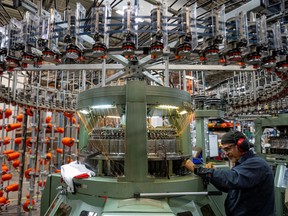
Manufacturers are being urged to expand incentives beyond the automotive sector in Ontario.
Trillium Network for Advanced Manufacturing is urging Canadian governments, specifically those in Ontario, to broaden their financial incentives beyond the burgeoning electric vehicle sector, arguing for a more strategic and targeted approach to revitalize Ontario’s manufacturing economy. This call comes following significant investments in the automotive industry – roughly $31.4 billion federally and an additional $17.4 billion from Ontario – along with billions from Quebec, totaling nearly $46.1 billion in private investment boosted by these incentives. At the heart of Trillium’s argument is the belief that relying solely on job creation as a primary metric for incentivizing investment is a flawed strategy.
The organization, based at Western University in London, Ontario, proposes a “selective,” “aggressive,” and “targeted” approach to investment, emphasizing investments in industries known for productivity, high wages, and their contributions to Ontario’s gross domestic product. Their report highlights a diverse range of sectors worthy of consideration: aerospace, chemicals, dairy products, pharmaceuticals, primary metals, and high-value electronics such as medical devices and wireless communication equipment. The group’s analysis directly responds to a long-standing trend: manufacturing’s decline in Ontario since 2004, both as a percentage of GDP and in absolute terms. This decline correlates with a decrease in manufacturing productivity—defined as the value of worker output per hour—particularly since 2020. Several factors contribute to this downturn, including the rise in lower-paying jobs within sectors like food manufacturing, coupled with a drop in vehicle production impacted by pandemic disruptions and supply chain issues, notably the shortage of semiconductor chips.
A key element of Trillium’s proposal is a shift in perspective regarding incentives. The organization recognizes the historical use of government grants and tax credits to attract automotive investment – a tactic employed since the mid-2000s – but argues it’s been largely ineffective in boosting overall manufacturing contributions to the province. The group contends that the current system inadvertently penalizes automation, a critical component for long-term productivity and competitiveness. Brendan Sweeney, managing director at Trillium, explains that automation is often viewed with apprehension by politicians, who frequently focus solely on the potential impact on job numbers. However, he asserts that automation frequently generates higher-paying positions and compels companies to invest in plant modernization, both of which represent positive outcomes for the government’s economic objectives. “It’s easy to announce jobs,” Sweeney stated, “It’s hard to say this will create fewer jobs, but they’ll pay better.”
Trillium’s strategy underscores the importance of qualitative metrics alongside quantitative measures when evaluating investment opportunities. They advocate linking incentives to the quality of jobs created – emphasizing higher wages and better compensation – as well as investments in critical technologies like automation and sophisticated tooling. The organization’s report further emphasizes the need for a renewed focus on technological advancement within the manufacturing sector. This broader, more strategic approach contrasts sharply with the previous reliance on simple job creation, a tactic that ultimately failed to address the underlying issues impacting Ontario’s manufacturing economy.
The call for a transformation in government policy comes at a significant moment, as the automotive sector continues to evolve and embrace electrification. Trillium’s expertise, gained through its pivotal role in shaping recent automotive sector investments, reinforces the urgency of adopting a more robust and forward-thinking strategy. Moving forward, a commitment to technological innovation and high-quality jobs will be pivotal to ensuring Ontario’s manufacturing sector can continue to thrive and contribute meaningfully to the province’s economic future.
