
US Inflation Expectations Ease, But Long-Term Forecasts Remain High
US Consumer Inflation Expectations Decline Amid Falling Gasoline Prices
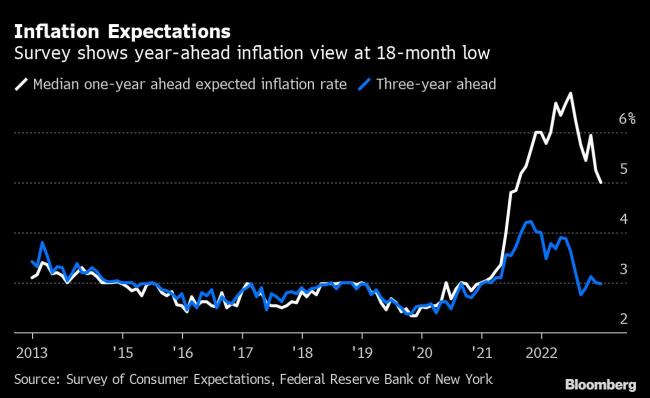
The Federal Reserve Bank of New York’s latest Survey of Consumer Expectations revealed a slight decline in median one-year-ahead inflation expectations, which now stand at 5%, the lowest reading since July 2021. This downward trend is primarily attributed to decreased concerns over gasoline prices, which are expected to rise by only 4.1% over the coming year. For context, just six months ago, consumers anticipated a 10% increase in gasoline prices.
In contrast, longer-term inflation expectations have edged up slightly due to higher price expectations from younger respondents. Specifically, median five-year-ahead inflation expectations increased by 0.1 percentage point to 2.4%. This moderate rise indicates that some individuals may be more optimistic about future price increases, although this shift is not reflected in overall one-year or three-year-ahead expectations.
Notably, US year-ahead inflation expectations for staples such as gasoline and food have declined by 0.7 percentage point. One-year ahead food price expectations now stand at a relatively low 7.6%. The reduction in consumers’ concerns over food prices can be attributed to the decline in global commodity costs, particularly lower demand and abundant supply levels.
The decrease in gasoline prices has indeed provided significant relief for households. Over recent weeks, the national average price of regular gasoline has fallen to $3.28 from its peak of over $5 last June. As expectations about future gasoline prices are more favorable, consumers appear less concerned about overall inflation. These decreased concerns have become apparent in multiple indicators, including consumer surveys and economic data.
The New York Fed’s survey is based on a rotating sample of approximately 1,300 households, with the latest round conducted in December. This robust dataset allows for comprehensive insights into US household expectations and behaviors regarding price rises.
In addition to changes in gasoline prices, other factors contributing to lower inflation expectations include reduced anticipation of supply chain disruptions. However, higher demand for certain goods and continued pressures on production have not been entirely alleviated. Additionally, as the economy expands, increased competition may drive prices upward despite overall declining costs.
Experts anticipate continued modest inflation growth over short-term projections. Bloomberg polls indicate that month-on-month CPI will remain unchanged in December, while year-over-year rates continue to cool. Fannie Mae’s survey provides some context for these trends by estimating 5.5% rental-price increases in the coming year and a decline of 1.6% in home prices.
Household Expectations and Economic Implications
Consumer expectations provide critical insight into household behavior, which can have significant impacts on broader economic trends. The decrease in one-year-ahead inflation expectations signifies greater tolerance for current price levels among households. These shifting attitudes could imply less urgency to prioritize investments or expenditures before potential future costs rise.
Conversely, falling inflation expectations may signal a diminished likelihood of central banks intervening with new monetary policies. However, sustained optimism from consumers can foster more growth and increased consumption without necessitating direct intervention by the Federal Reserve.
As economic conditions continue to evolve, maintaining flexible responses to shifting expectations will be essential for household financial decision-making and overall economic resilience.
Impact on Monetary Policy
Federal Reserve actions are closely tied to changes in inflation expectations. As median one-year-ahead expectations decreased from 5.2% to 5%, policymakers may reassess their monetary policy trajectory. However, it must be considered that these shifts primarily stem from falling gasoline prices rather than underlying economic indicators.
Moreover, the ongoing contraction of aggregate demand due to increased household skepticism can serve as a reminder of the limitations on immediate monetary easing actions. The New York Fed’s survey has highlighted areas where growth and optimism converge with inflation expectations – particularly rental price increases and home prices. A focus will be placed on understanding these dynamics in order to tailor policy measures accurately.
Furthermore, rising five-year-ahead inflation expectations could pose long-term implications for the Federal Reserve’s monetary strategy. Policymakers will need to balance ongoing flexibility with sustained efforts to communicate their responses to shifting economic trends.
Economic Context and Outlook
While reduced one-year-ahead inflation expectations provide comfort for households and policy makers alike in short-term contexts, economists emphasize that consumers often underestimate price increases on key goods. To combat future risks of accelerating growth due to artificially low gas prices and other structural challenges to global supply chains, experts advocate for diversifying production capacities, implementing targeted demand management tools when critical vulnerabilities arise.
Considering ongoing issues affecting the economy, a comprehensive approach that encompasses these dynamics will foster effective policy outcomes.
The latest readings from the New York Fed and Fannie Mae surveys provide significant insight into key economic trends such as household expectations, employment growth, interest rates, wages, and price adjustments. Policy makers and experts concur that monitoring shifting expectations in real-time helps to fine-tune their decision-making process when intervening with monetary measures.
Moreover, policymakers should not ignore potential future concerns regarding wage inflation despite moderate median five-year-ahead price growth, as these figures may overestimate long-term economic stability given the complexities of supply chain conditions and other factors at play. By integrating multiple perspectives from experts in economics and public policy and staying attuned to continuously shifting sentiment around key macroeconomic variables, a nuanced analysis is produced that offers deeper understanding into near-future implications.
Conclusion
In conclusion, as reflected by the New York Fed’s Survey of Consumer Expectations, consumer inflation expectations have declined slightly, primarily driven by decreasing concerns over future gas prices. A decrease in one-year-ahead food price expectations has also contributed to this decrease. The current economic scenario, influenced by fluctuations in gasoline costs and commodity supplies, is critical for understanding shifting sentiment toward near-future expectations.
In response to these findings, continued monetary policy flexibility will remain essential, as experts emphasize that sustained optimism among households can maintain growth without immediate central bank interventions. Policymakers should reassess their policy approaches given consumers’ decreased anticipation of further price increases, but must also account for potential supply chain challenges and demand-side pressures influencing future economic conditions.
Moreover, an expanded examination of household expectations will remain critical in accurately tracking near-future implications on the economy due to its strong correlation with changes in interest rates. This heightened awareness enables data-driven adjustments by policy experts when implementing monetary policies aimed at controlling ongoing growth while fostering a resilient recovery amid rising concerns about underlying structural factors.
