
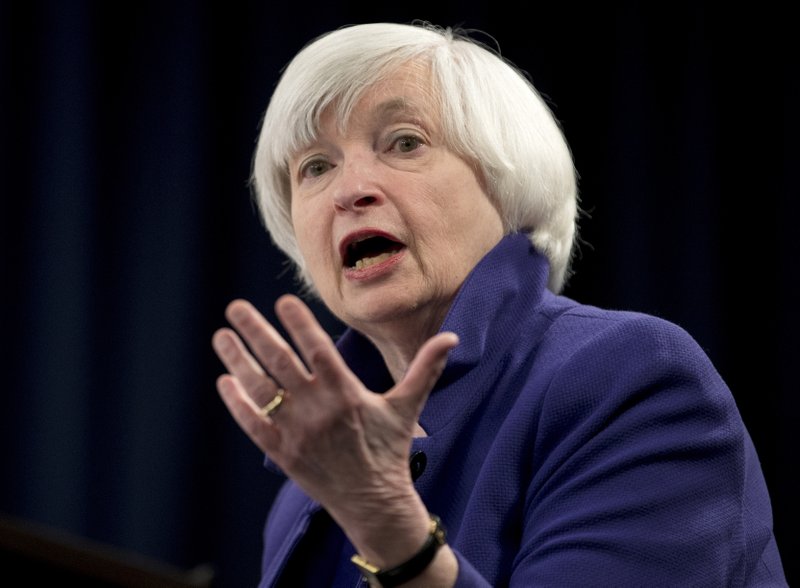
US Treasury Secretary Janet Yellen Proposes Global Corporate Tax Hike: A 28% Minimum Rate to Combat Avoidance
Globalization, Digitization, and the Changing Landscape of Corporate Taxation
The intersection of finance, economics, politics, and governance is a complex phenomenon that has far-reaching consequences for nations and their citizens. One critical aspect of this integration is taxation, which plays a vital role in funding government activities while also impacting economic growth and individual freedoms. The ongoing battle between governments trying to raise as much tax revenue as possible and citizens attempting to pay as little tax as possible is a classic tug-of-war that has been ongoing for centuries.
The Secretary of the Treasury, Janet Yellen, recently suggested imposing a minimum international corporate tax rate to prevent corporations from avoiding taxes by taking advantage of lower rates in other countries. This proposal has sparked controversy and raises serious questions about its implications on individual freedoms and the economy as a whole.
To put this issue into perspective, it’s essential to examine some recent events that have led to this point. In 2017, the Trump administration passed a new tax law, lowering the corporate tax rate to 21%. The reasoning behind this move was to make America more competitive in the global marketplace and encourage corporations to repatriate funds parked overseas in lower-tax jurisdictions.
However, over the past 16 months, due to the pandemic and resulting economic lockdowns, governments have had to spend trillions of dollars to support their economies. This massive spending has led to a significant increase in deficit spending, which is now a pressing concern for policymakers worldwide.
Despite collecting more tax revenue every year since 2009, the US government continues to widen its deficit gap. The burden of this increased tax revenue on corporations could have several unintended consequences, including reduced economic growth, decreased competitiveness, and a shrinking tax base.
Taxation Policy and Economic Growth
Governments rely heavily on taxation as a means of funding their activities and providing essential public services. However, the relationship between taxation, economic growth, and individual freedoms is complex. A high tax rate can stifle economic activity by reducing disposable income and increasing the cost of doing business.
On the other hand, low tax rates can lead to tax avoidance strategies that shift profits to jurisdictions with lower tax rates, undermining the government’s ability to collect revenue. Secretary Yellen’s proposal aims to solve this problem by introducing a minimum international corporate income tax rate of 28%.
The idea is to prevent corporations from exploiting differences in national tax rates while also creating more incentives for them to invest and do business within the United States. However, critics argue that such a policy would amount to capital controls, which restrict the free flow of financial capital between countries.
The Impact on Global Economic Interactions
Treasury Secretary Yellen’s proposal is centered around preventing corporations from moving their operations offshore in search of lower tax rates. She believes this can be achieved through an international agreement on a minimum corporate income tax rate. However, this raises several concerns regarding individual freedoms and the potential for coercion among nations.
By imposing a unilateral policy on what businesses can pay in other countries, Secretary Yellen is essentially disregarding the principles of free markets and competition that have driven economic growth over the centuries. This echoes arguments made by economists who oppose capital controls, which can stifle economic activity and prevent resources from finding their most efficient use.
Countries have historically engaged in a continuous battle for economic attraction, with governments competing to create better conditions for businesses and individuals. Lower tax rates have been a major draw, with nations like Ireland offering corporate tax rates of 12.5%. In contrast, the United States has seen its corporate tax rate fluctuate significantly over the years.
If implemented, Secretary Yellen’s proposal could reduce the incentive for corporations to invest in countries with lower tax rates, potentially limiting their growth and competitiveness in these markets.
The New Reality: Competition Among Governments
The rise of remote work and increased globalization have dramatically altered the landscape of corporate taxation. Businesses are no longer tied to specific locations but can freely move between jurisdictions to wherever they find the most attractive conditions for growth.
Governments must compete with other countries by providing better infrastructure, favorable regulations, and lower tax rates to attract businesses and talent. Imposing a minimum international corporate income tax rate could harm competitiveness in these markets while reducing individual freedoms by restricting freedom of choice in terms of where one wants to do business.
The Future of Corporate Taxation
As economies continue to evolve with the advent of digitization and globalization, governments face increasing pressure from taxpayers to adapt their taxation policies. Secretary Yellen’s proposal represents a significant attempt to address concerns around tax avoidance while raising necessary revenue for government activities.
However, this move also highlights a deep-seated tension between policymakers, businesses, and individual citizens as they navigate the complexities of taxation policy in an increasingly interconnected world.
As we strive towards fairer and more effective taxation systems that respect both national interests and economic realities, it’s time to explore new models that balance tax collection with individual freedoms and incentives for businesses.
