
Blooming Trade Tensions: Trump’s Tariffs Ignite Global Economic Firestorm
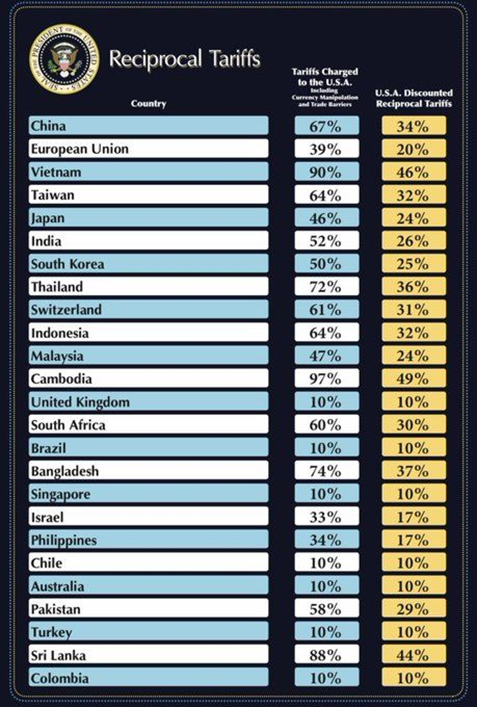
The United States has entered a period of heightened trade tension, as President Trump announced a national emergency over trade deficits and imposed tariffs on several countries. The average tariff is expected to rise significantly in the coming weeks, with potential long-term implications for global trade.
An Uncertain Era for Global Trade and Finance
President Trump’s actions mark a significant shift from speculation to worst-case scenario planning, with far-reaching consequences for international commerce. The administration aims to reduce the country’s substantial trade deficit, which it views as an economic injustice. However, targeting nations based solely on imbalances lacks nuance in addressing unfair practices.
This tariff increase will disproportionately affect countries that are already struggling economically due to a weak global economy. European Union officials and Chinese leaders have expressed readiness to retaliate against these new tariffs. President Trump has further vowed that the United States will impose more punitive measures should other nations follow China’s lead and take counteractions.
In light of this significant escalation, investors and businesses would be better advised to prepare for potential downward pressure on stocks in countries under penalty. They can stay updated about new policy responses from their respective governments by following local news platforms, media broadcasts on live streaming, trade agreements forums or online news agencies offering real-time economic reporting. Those looking forward to making long-investments are best off relying on economic history and future market tendencies rather than current government actions.
Bloomberg Economics’ 2025 GDP Estimate
According to Bloomberg Economics, the United States has experienced an unprecedented 22% boost in average tariffs across goods with a total of approximately $3 trillion in value, breaking one hundred-year records. While this rise is more extreme if seen through the lens of individual countries and their relative share of US imports (Bloomberg Economics emphasizes that not all tariffs will affect China), the forecast remains volatile.
Three possible eventualities may unfold:
- The Chinese government could choose to engage in serious negotiations over fair trade practices.
- European nations might start retaliatory measures, leading Trump administration officials to decide whether they should accept a stalemate.
A critical indicator for determining the final course involves evaluating China’s ability (and thus readiness) to effectively cope with an impending rise in global supply chain costs that stems directly from imposed tariffs.
Potential Escalation and Market Volatility
The recent decision signifies a substantial escalation of tensions. This makes one question how it is likely to shape overall uncertainty indexes, along the way causing greater stock instability while impacting global supply chains.
In short term trading strategies one might look forward relying heavy exposure over emerging stocks that have strong revenue potential or have recently received major updates on growth potential.
The future response from China will be a key determining factor in how these heightened tensions ultimately play out. A decline in the value of their currency could amplify economic unrest, prompting investors to reconsider diversifying across sectors with relatively stronger fundamentals. On the other hand, Chinese authorities could adopt policies that address trade imbalances by increasing exports or reducing imports.
As it is right now we can expect significant volatility and market fluctuations until any form of resolution arises. Any drastic change might have severe consequences for global markets.
US growth is projected to contract in coming months amid weaker consumer spending
US GDP Growth: A Shift from Expansion to Contraction?
Contrary to predictions just two months ago, the Atlanta Fed’s real-time economic model projects Q1 2025 real GDP growth of -3.7%. Considering imports, this estimate would be even more severe at a contraction of -1.4%. This significant reversal is worth noting as it may have some implications on near-term investment opportunities.
Implications and Investing Strategies
Market experts like Robin Brooks, who wrote several publications about global markets in a state of heightened uncertainty, remind investors that now’s still the best time to look into more diversified investment strategies. A long-term view would indeed help to cope better with rapidly escalating trade tensions.
In short, traders may benefit from making informed decisions as they keep pace with news updates on further developments in global politics and ongoing US-China relations. By engaging actively in tracking both economic indicators such as Gross Domestic Product (GDP) along with any new government announcements related directly or indirectly influencing potential investor profits.
Conclusion
The recent imposition of tariffs by the administration has initiated an unprecedented rise in uncertainty and global market volatility, amid growing concerns over its lasting consequences on international trade relationships. A key uncertainty involves how China handles economic pressure following higher tariff rates imposed upon exports from countries with significant current imbalances against the US, leading to multiple possible developments – some of which suggest even greater potential unrest or shifts towards recovery depending entirely upon individual and international strategic responses.
In conclusion we must recognize both global financial markets’ heightened sensitivity to trade-related events due to recent volatility along new tariffs impacting numerous world economies worldwide including major trading countries like Europe. Investors face a crucial challenge today: taking into account complex factors while making timely investment decisions.
A Final Thought
The introduction of higher tariffs increases the likelihood that other nations will retaliate, potentially leading to a rapid escalation in trade tensions worldwide. Market volatility and potential downturns make long-term investments more suitable to pursue as they provide protection against rapidly changing global political landscapes.
For instance an investor who seeks optimal diversification through both equity market segments (and corresponding sector-specific assets), should keep track of major economic shifts influenced globally while making sure not just to respond but rather anticipate upcoming scenarios such that portfolio resilience stays intact.
Investors need careful consideration and planning as these significant recent changes significantly reflect ongoing shifting realities in the current fast-changing global economy.
