
Bank of Canada Sees Higher Interest Rates Lingering in Canada
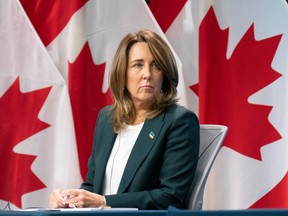
Bank of Canada Deputy Governor Carolyn Rogers has signaled that elevated interest rates are likely to persist for an extended period, anticipating a challenging economic environment for households and businesses across Canada. Rogers’ comments, delivered in Vancouver, reflect a growing consensus among Bank of Canada officials that the era of historically low borrowing costs is coming to an end, driven by factors including rising government debt and heightened global geopolitical risks. The Bank of Canada held its key overnight interest rate steady at five per cent for the second consecutive time in October, a decision reinforced by Rogers’ remarks, which indicate that policymakers are viewing borrowing costs as less of a constraint on the economy.
The deputy governor’s assessment is rooted in the observation that structural forces previously supporting low borrowing costs have reversed course. She acknowledged that increased government debt, coupled with persistent global geopolitical uncertainties, presents a significant risk of further elevating interest rates worldwide. This environment poses a considerable challenge for Canada, an open economy vulnerable to external shocks. Rogers stressed that the Bank is monitoring how households are adjusting to the combination of higher inflation and higher interest rates, particularly given that 40 per cent of mortgage holders have already experienced renewals at increased rates. The Bank is particularly attentive to the situation of Canadian households grappling with debt, as elevated borrowing costs are exacerbating existing financial pressures.
Looking ahead, Rogers anticipates that virtually all remaining mortgage holders will undergo renewal cycles by the end of 2026. The trajectory of interest rates during this period will significantly impact household debt burdens, and the Bank is closely watching this evolution. Banks and financial institutions are proactively adjusting by increasing their capital and liquidity buffers, effectively setting aside additional cash reserves as a precautionary measure. This proactive adjustment reflects the Bank’s assessment of potential credit losses, particularly in a scenario where global financial stress were to re-emerge and persist. Governor Tiff Macklem publicly stated last week that the theoretical neutral rate, representing neither restrictive nor stimulative conditions, was likely drifting higher, and he expressed a lack of comfort with the Bank’s previously established range of two to three per cent for this rate.
Rogers’ assessment isn’t a precise prediction of future interest rate movements, but it underscores the growing certainty among Bank of Canada leadership that borrowing costs will remain above the levels seen over the past 15 years. The shift reflects an increasing acknowledgement that monetary policy is less effective than previously understood in the current economic climate. The Bank is focused on observing the economic landscape and adjusting its approach accordingly. These views align with those expressed by Bloomberg.com and other financial news outlets that have reported on the Bank’s evolving outlook, specifically concerning Governor Macklem’s assessment that the neutral rate is shifting upwards.
