
California Becomes World’s Fourth-Largest Economy, Newsom Says
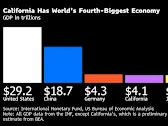
California Governor Gavin Newsom announced this week that the state’s economy has achieved the status of the world’s fourth-largest, a remarkable ascent placing it alongside global economic giants like the United States, China, and Germany. The announcement, fueled by recently released data from the International Monetary Fund and preliminary figures from the U.S. Bureau of Economic Analysis, highlights California’s continued economic momentum and positions it as a significant player on the global stage. Newsom’s statement underscores a nominal gross domestic product of $4.1 trillion for the state during the past year, surpassing Japan’s $4.02 trillion figure. This significant milestone reflects ongoing investment in the state’s workforce and a continued commitment to sustainable practices, according to the Governor’s words.
California’s Economic Rise and Strategic Positioning
The achievement of this ranking represents not just a numerical increase, but also a strategic shift in California’s economic influence. Newsom’s administration is actively leveraging this position to challenge federal trade policies implemented under the Trump administration. Specifically, the Governor is aggressively contesting tariff hikes, arguing that the Republican President’s actions lack congressional authorization and potentially harm critical industries within the state. This legal challenge, alongside ongoing negotiations with foreign leaders, reflects a deliberate effort to safeguard California businesses from retaliatory measures. The state views itself as particularly vulnerable to the effects of these tariffs due to the size and breadth of its key sectors, including real estate, finance, and technology. Newsom’s strategy is rooted in a conviction that California’s economic power should be used to advocate for policies that benefit its industries and, by extension, the nation’s overall economic health.
Demographic Shifts and Economic Drivers
Beyond the headline figure, several underlying demographic and economic trends contributed to California’s economic strength. Notably, the state experienced a population increase of approximately 250,000 people during the past year, driven by a rebound in births and a surge in international migration. While the total population remains below pre-pandemic levels, this growth demonstrates the state’s continued attractiveness as a destination. The resurgence in births, in particular, is a positive indicator for the state’s long-term economic outlook. Furthermore, the real estate, finance, and technology sectors continue to be major driving forces behind California’s economy. These sectors, renowned for their innovation and dynamism, generate substantial revenue and investment, directly contributing to the state’s overall economic performance. The robust performance of these industries underscores California’s role as a leader in global innovation.
Global Economic Context and Future Projections
It’s important to consider California’s economic trajectory within the broader context of the global economy. This week, the International Monetary Fund (IMF) issued a stark warning, sharply lowering its forecasts for global growth this year and next, citing the escalating effects of trade disputes and, specifically, President Trump’s tariffs. The IMF reduced its global growth forecast to 2.8% for 2025, a significant decrease from its initial projections of 3.3%. The United States is also projected to expand by 1.8% in 2025, a reduction of nearly a full percentage point. These global economic headwinds highlight the vulnerability of California’s achievements to forces beyond its immediate control, underscoring the need for continued vigilance and strategic planning.
Long-Term Challenges and Future Outlook
Despite the current success, the state’s elevated ranking may not be sustainable indefinitely. The IMF’s projections indicate that India is poised to surpass California’s economic standing in 2026, presenting a significant long-term challenge. India’s rapidly growing economy, coupled with its increasing global influence, is expected to accelerate its economic trajectory, potentially overtaking California within the next few years. This prediction necessitates that California continues to adapt and innovate to maintain its competitive edge. Newsom’s administration acknowledges this challenge and is committed to investing in research and development, fostering entrepreneurship, and promoting sustainability – all efforts designed to secure California’s position as a global economic leader in the years to come.
Concluding Remarks
California’s attainment of the world’s fourth-largest economy represents a remarkable achievement, fueled by strategic leadership, robust economic sectors, and a dynamic population. While challenges, particularly the projected rise of India, remain, the state’s current momentum demonstrates its continued economic strength and influence on the global stage. Newsom’s administration is committed to addressing these challenges and capitalizing on opportunities, solidifying California’s position as a powerhouse of innovation and economic growth.
