
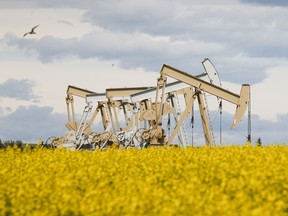
Canada Fears Trade War as Ottawa Prepares Energy Export Retaliation
Oilpatch anxiety surged as anticipated retaliatory measures from the Canadian government and provincial authorities threatened to target energy exports in response to potential tariffs imposed by the incoming U.S. President Donald Trump. The concerns were particularly pronounced within the Canadian oilpatch, where industry leaders and analysts expressed deep apprehension regarding potential disruptions to established trade flows.
The escalating tensions stemmed from Trump’s stated intentions to implement a tariff on all goods entering the country from Canada and Mexico, igniting alarm throughout the Canadian economy, with the energy sector bearing the brunt of the immediate worry. Discussions quickly shifted to the implications for Canada’s crucial energy exports, representing a significant portion of the nation’s economy.
At the heart of the anxiety was the potential for a tit-for-tat trade war. Cenovus Energy Inc., a major integrated oil producer owning refineries and assets across Canada and the Midwest and Texas, issued a stark warning: any trade barriers could have “a serious negative impact” on both sides of the border. Spokesperson Reg Curren emphasized this risk, stating that a reduction in Canadian exports would inevitably lead to decreased revenues for industries and governments, ultimately increasing the cost of gasoline, diesel, aviation fuel, and asphalt – products in which Cenovus held a leading position.
Canada’s reliance on U.S. demand for its energy exports was a key factor driving the concern. Since 2010, these exports had more than doubled, reaching nearly four million barrels per day (MMb/d) from 1.9 MMb/d, as detailed by the Canada Energy Regulator and the U.S. Energy Information Administration. The American Petroleum Institute, a powerful trade organization representing the U.S. energy industry, had already urged the administration to exclude crude oil, natural gas, and related products from any potential tariffs. The institute argued that U.S. consumers depended on a free flow of energy and that tariffs would threaten North American energy security.
The interconnectedness of the two countries’ energy markets—facilitated by critical infrastructure links and longstanding commercial arrangements—further amplified the stakes. Ontario Premier Doug Ford, demonstrating the severity of the potential consequences, explicitly threatened to implement retaliatory tariffs and cut off energy supplies, including electricity and fuels, to neighboring states if Trump followed through with his tariff plan. Similarly, British Columbia Premier David Eby pledged provincial support for retaliatory tariffs. The federal government, acknowledging the gravity of the situation, also indicated consideration of an export tax on key commodities, such as oil, potash, and uranium, according to Bloomberg News.
However, these threats faced resistance from within the Canadian oilpatch, where industry veterans feared weaponizing energy exports, even temporarily, could have lasting and detrimental effects. The potential ramifications extended beyond simple trade disruptions, touching upon broader economic stability and long-term investment.
Despite these anxieties, understanding the Canadian economy’s position amidst this situation became critical. Economists noted that while a tariff on Canadian products would likely be paid by U.S. importers, the discount on Canadian oil barrels would likely be passed down to consumers in both countries. RBN Energy LLC analyst Housley Carr highlighted that a significant increase in the delivered cost of imported Canadian crude would be “enormous.” According to Carr, many refineries in the Midwest (PADD 2) were heavily reliant on Canadian crude, representing the region’s No. 1 feedstock.
“Just as important, PADD 2 refineries have no real alternative … there is no cost-effective way to deliver vast quantities of comparable imported heavy oil (domestic production is almost exclusively light) from Gulf Coast docks to the Midwest,” Carr said, suggesting a tariff would hinder refining margins and result in higher gasoline, diesel and jet fuel prices. “Very likely, a tariff would lead many refineries in the PADD 2 to either ramp down their operations or even shut down.”
The Canadian oil sector’s position was further complicated by significant export dynamics. Canadian crude accounts for 65 per cent of total crude runs in Midwest refineries, making it the No. 1 feedstock in the region. Chet Thompson, chief executive of the American Fuel & Petrochemical Manufacturers association, stated that there’s no easy, fit-for-purpose replacement for this crude oil.
Despite these challenges, Canada has managed to boost its crude production by 3 percentages over the past three years, thanks to growing global demand and enhanced export capacity via the Trans Mountain Pipeline expansion (TMX). However, some industry observers believe that Canada’s dependence on the U.S. – with over 97 per cent of Canadian crude exports destined for the U.S. in 2023 – left the nation vulnerable to such geopolitical shifts.
The situation underscored a critical need for alternative markets and infrastructure. Jackie Forrest, executive director of the ARC Energy Research Institute, argued that “One of our weaknesses is that we don’t have a lot of other places to sell our product. If we had one additional oil pipeline, let’s say the size of (Northern) Gateway, that would result in us not having to take price discounts because we would have alternative places to sell our products.”
Ultimately, the Canadian oilpatch faced an uncertain future, contingent on navigating intricate trade negotiations and managing the potential disruptions posed by a shifting global economic landscape. The situation highlighted the vulnerability of Canada’s economy to external political forces and the urgent need to diversify its energy markets.
