
Canada’s 2024 Budget Relies Heavily on Tax Growth and Economic Forecasts
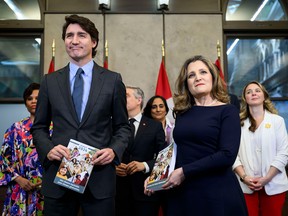
Canada’s federal budget for 2024, presented by Finance Minister Chrystia Freeland, relies heavily on optimistic projections regarding tax revenues and economic growth, according to economist Jimmy Jean of Desjardins Group. Jean outlined key concerns and expectations emerging from the budget discussions on the floor of the federal parliament in Ottawa. The budget’s success, he asserted, hinges significantly on the realization of certain economic forecasts.
The budget’s primary focus involves a plan to bolster the Canadian economy through targeted investments and fiscal measures. However, Jean emphasized that the government’s commitments are predicated on assumptions that may prove difficult to achieve, particularly those related to increased tax revenue. He noted a reliance on a projected rebound in oil prices, anticipating levels of $100 per barrel, as a crucial factor in bolstering government finances and stimulating economic activity. The budget’s success is therefore intertwined with the trajectory of global oil markets.
Furthermore, Jean underscored the government’s belief in continued economic growth rates. The budget incorporates projections for sustained economic expansion, a key element in justifying the scale of planned expenditures. However, the economist cautioned that this growth is not guaranteed and vulnerable to external economic shocks and fluctuations in global demand. He indicated a delicate balancing act, where increased government spending must be accompanied by genuine economic momentum.
The budget’s proposed measures aim to support various sectors of the economy. Investments are earmarked for initiatives such as skills training, clean technology, and infrastructure projects. The goal is to stimulate job creation and promote long-term economic competitiveness. But, as with the focus on higher oil prices, the effectiveness of these investments remains contingent on broader economic conditions and the ability of the economy to generate sufficient revenue to sustain them.
During the discussions, Jean highlighted the importance of continued Bank of Canada rate cuts. While the Bank of Canada has signaled its intention to reduce interest rates, the pace and extent of these cuts will depend on inflation data and broader economic trends. The budget’s success is linked to the Bank of Canada’s willingness to respond to economic weakness, further solidifying the dependence on positive economic indicators.
The budget’s overall outlook is cautiously optimistic, representing a significant investment in Canada’s future. However, the government’s plan is built on a number of key assumptions that face considerable uncertainty. The success of Canada’s federal budget 2024 will undoubtedly be judged by its ability to navigate a complex economic landscape, marked by volatile global markets and evolving economic conditions. The budget’s ultimate impact rests on the combined forces of positive economic growth, responsive monetary policy, and the realization of key revenue assumptions.
