
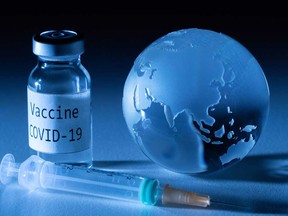
Canada’s Vaccine Delay: Other Countries Could Be First
Ottawa — Prime Minister Justin Trudeau acknowledged Tuesday that Canada’s lack of domestic vaccine production capacity presents a challenge, stating that countries like the United States, Germany, and the U.K., which possess established pharmaceutical facilities, will likely prioritize inoculating their citizens before Canadians receive doses. This situation has prompted a renewed focus on bolstering Canada’s own manufacturing capabilities for vaccines, a strategic investment intended to ensure the nation’s readiness for future pandemics. “One of the things to remember is Canada no longer has any domestic production capacity for vaccines,” Trudeau stated during his regular COVID-19 news conference, held outside his home in Ottawa.
The Prime Minister’s remarks underscored a significant vulnerability exposed by the global scramble for COVID-19 vaccines. While Canada has secured contracts for millions of vaccine doses from various international pharmaceutical companies, and is engaged in discussions with other nations to secure equitable access, the absence of local production means Canada relies entirely on foreign suppliers for the critical supply. “Countries like the United States, Germany and the U.K. do have domestic pharmaceutical facilities, which is why they’re obviously going to prioritize helping their citizens first,” Trudeau explained. The government’s current strategy involves securing access to a diverse portfolio of vaccines to mitigate supply chain risks and to fulfill its commitment to providing vaccinations to all Canadians.
Despite this challenge, Trudeau emphasized that the federal government intends to address the gap in domestic vaccine production. “And that will be in place in the coming years. If ever there is another pandemic we will not be caught off the wrong foot again,” he asserted. This pledge reflects a broader commitment to self-reliance and national security, recognizing the strategic importance of domestic manufacturing in the face of global health crises. The potential development of domestic vaccine production capacity is projected to take several years, but is viewed as a crucial step in safeguarding Canada’s ability to directly support its citizens in times of sickness.
Meanwhile, provincial health officials are grappling with increasing COVID-19 case numbers. Ontario and Quebec reported over 1,000 new cases of the virus on Tuesday, highlighting the continued spread of the disease within the country. Furthermore, the Manitoba government issued one ticket in connection with a church service that allegedly violated provincial regulations prohibiting public gatherings, with more tickets expected to be issued. RCMP officers attended the service near Steinbach and found more than 100 people present. In addition, the Manitoba government also fined 16 individuals who attended an anti-mask rally earlier this month, and further fines are anticipated. These enforcement actions underscore the urgency of adherence to public health measures.
These developments occurred as the Canadian government continued to prioritize vaccine delivery, with the expectation that the first doses would begin to arrive in Canada during the early months of 2021. The successful implementation of this strategy is paramount to controlling the pandemic and protecting the health of the Canadian population. Trudeau concluded that Canadians needed to do everything they could to avoid contracting COVID-19 until vaccines are widely available. The commitment to domestic vaccine production, alongside continued efforts to secure international supply chains, represents a multi-faceted approach to navigating the ongoing crisis.
