
Trudeau Sets Ambitious Climate Goals Amid Coastal Flooding Crisis
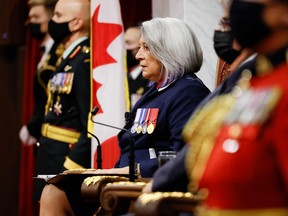
Prime Minister Justin Trudeau outlined his government’s third term, emphasizing decisive action on climate change amidst unprecedented flooding in British Columbia’s Pacific coast. Alongside this, the government prioritized constructing a resilient post-pandemic economy, underpinned by Canada’s first national child-care plan, and addressing the enduring challenges stemming from historical injustices toward Indigenous peoples. The Throne Speech, delivered by Governor General Mary Simon but written by the Prime Minister’s office, was delivered two months following the government’s return to power.
The speech focused heavily on escalating climate policy. Simon stated, as per the prepared text, a commitment to “move to cap and cut oil and gas sector emissions, while accelerating our path to a 100 per cent net-zero electricity future.” Simultaneously, the government pledged to develop a comprehensive climate adaptation strategy, invest in public transit systems, and mandate the sale of zero-emission vehicles. However, the speech lacked specific details regarding these initiatives. This commitment to aggressive environmental goals comes as British Columbia grapples with catastrophic flooding. Vancouver, Canada’s third-largest city and a significant shipping port, was effectively cut off from the rest of the country due to widespread flooding caused by torrential rains, impacting critical infrastructure and farmland. This crisis, coupled with ongoing wildfires and extreme heat this summer, demanded immediate attention. The province also implemented fuel rationing to cope with the situation.
The Throne Speech addressed a number of intertwined priorities. Beyond climate action, the government reiterated its pledge to maintain stability through vaccine mandates and the procurement of updated COVID-19 doses and childhood vaccinations, alongside efforts to strengthen Canada’s healthcare system, working in cooperation with provincial governments. Furthermore, the government intends to continue providing income supports to sectors hardest hit by the pandemic, with a longer-term focus on completing the rollout of the national daycare plan, investing in affordable housing projects, and assisting first-time homebuyers. Legislation was also promised to regulate streaming and social media companies, currently stalled in the Senate, aiming to address concerns about misinformation and content moderation. The government also reaffirmed its commitment to ensuring community safety through the buyback of banned assault weapons and collaborations with jurisdictions seeking to ban handguns, and continued its efforts to strengthen partnerships within the Indo-Pacific region and the Arctic.
Despite a substantial deficit exceeding $300 billion in the previous fiscal year and a further planned $78 billion in spending, the Liberal government remains focused on its ambitious agenda. Governor General Mary Simon emphasized that this was a “moment for parliamentarians to work together to get big things done, and shape a better future for our kids.” However, this progress is being met with significant opposition from the Conservative Party, particularly regarding the financial implications. Conservative lawmaker Pierre Poilievre criticized the government’s spending, noting that annual inflation, currently at 4.7 per cent – the highest since 2003 – significantly outpaces wage growth and the Bank of Canada’s target. “When you spend more, it costs more,” Poilievre stated.
The Liberal government, while anticipating support from the New Democratic Party, faces considerable resistance from the Conservatives concerning the cost of its initiatives. The government’s commitment to rapid climate action and substantial spending is being challenged by concerns about inflationary pressures and the overall sustainability of its fiscal policy. The situation in British Columbia, demanding immediate resources and strategic responses, further complicates the government’s efforts. With ongoing support from Bloomberg.com, the government aims to address these complex issues while navigating a shifting economic landscape and pressing domestic challenges; however, the path forward remains uncertain, demanding careful management and strategic collaboration.
