
U.S. Dockworker Strike Threat Sparks Stockpile Warnings
New York Governor Kathy Hochul has stated her firm expectation that the impending strike by dockworkers will proceed, resulting in the cessation of operations at key East and Gulf Coast trade gateways, including the Port of New York and New Jersey, the nation’s busiest Atlantic hub for international commerce. This disruption poses a significant threat to the nation’s supply chains and is already drawing concern from officials across the country. The situation is unfolding rapidly as the International Longshoremen’s Association (ILA) and the U.S. Maritime Alliance (USMX), representing ocean carriers and port terminal operators, remain at an impasse, with no scheduled negotiations planned before the expiration of their contract at midnight – setting the stage for a potential strike commencing Tuesday. The potential economic ramifications are substantial, with estimates suggesting a daily impact between US$3.8 billion and US$4.5 billion, particularly if the disruption extends beyond a few weeks, potentially leading to depleted store shelves due to a prolonged stoppage.
The immediate concern is centered on the Port of New York and New Jersey, where approximately 47,000 workers are poised to strike, including 4,500 in the immediate New York and New Jersey area. Officials are urging residents not to engage in panic buying or stockpiling of supplies, a situation that emerged prominently during the COVID-19 pandemic. They emphasize the current security of the food supply chain, but acknowledge the potential for widespread disruptions if the strike stretches longer than anticipated. The state agencies are actively working with the supply chain industry to expedite the movement of cargo from ships and out of port terminals, prioritizing the discharge of goods before the strike timeline begins. These efforts include proactive measures to mitigate the immediate impact of the work stoppage.
The potential economic ramifications extend beyond simply the Port of New York and New Jersey. Preliminary estimates, provided by JPMorgan Chase & Co. transport analysts, suggest the shutdown of eastern and Gulf ports could have a devastating impact on the U.S. economy, potentially affecting a wide range of sectors. Specifically, automobile shipments are anticipated to face considerable delays, prompting dealers to advise customers expecting deliveries this week to verify the status of their orders. Furthermore, shipments of semiconductor chips, a critical component in numerous industries, could also be halted, exacerbating supply chain vulnerabilities. The breadth of the potential disruption highlights the interconnectedness of the national economy and the dependence on efficient port operations.
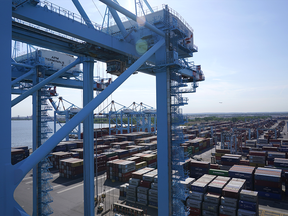
Rick Cotton, the NY-NJ Port Authority’s executive director, indicated that the facility anticipates approximately 100,000 containers remaining stored at the NJ-NJ port for the duration of the strike. These ships, already en route to the port, are expected to anchor in the surrounding waters until the work stoppage concludes. This situation places significant pressure on port resources and highlights the logistical challenges related to managing a protracted disruption. The situation is evolving rapidly, and the exact extent of the impact remains uncertain.
Retail Industry Leaders Association president Brian Dodge has issued a strong plea for both sides to return to the negotiating table, urging Joe Biden to consider “all options” to prevent a prolonged disruption to the U.S. economy. Dodge’s statement underscores the urgency of the situation and the potential for significant consequences for consumers should the strike continue. President Biden, in his assessment, believes resolving the dispute is a matter for collective bargaining, dismissing intervention as premature.
The situation is being closely monitored by financial analysts and government officials alike. The potential economic impact is substantial, and the uncertainty surrounding the strike’s duration adds to the complexity. While officials are working to mitigate the potential damage, the possibility of a prolonged shutdown remains a key concern. The situation also highlights the broader challenges facing the U.S. supply chain, including labor relations and the need for greater resilience in the face of potential disruptions.
