
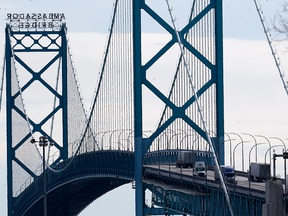
U.S. Global Tariff Poses Existential Trade Risk to Canada
The escalating threat of a global tariff imposed by the United States represents a profoundly concerning existential challenge for Canada, one far more significant than the proposed renewal of the United States–Mexico–Canada Agreement (USMCA). The potential imposition of this tariff—initially set at 10 percent, escalating to 25 percent over four years—is not merely a political maneuver; it’s the manifestation of a growing, globally-oriented trade war, one already actively being waged by key trading partners like China, as well as by the United States itself. This situation demands immediate and comprehensive action from Canada, moving beyond familiar strategies.
The core of the crisis lies in the fundamental shift in global trade dynamics. The United States, under the current administration, is signaling a deliberate departure from the long-established norms of rules-based international trade. This departure is being fueled by an economic populism, reflected in the emerging trade orthodoxy championed by influential think tanks in Washington, D.C., and promoted by key figures, including J.D. Vance and Robert Lighthizer. The intent is clear: to revitalize American manufacturing by forcing businesses back onto domestic soil through increased import costs. However, this approach overlooks the interconnectedness of the global economy and introduces substantial risk.
Historically, when the Nixon administration implemented tariffs in 1971, the impact on Canada was somewhat mitigated. The tariffs were specifically exempted from oil and automobiles—representing roughly one-third of Canada’s exports to the U.S. Furthermore, the 1971 tariffs were only enacted for a brief five-month period and lacked any escalation provisions. The current situation is markedly different. The scale of the proposed global tariff, combined with the fact that it would apply to all imports, represents a far more comprehensive challenge. Equally concerning is the fact that nations like China and the United States are already investing heavily to defend themselves against potential fluctuations in trade, signaling a willingness to engage in a protracted trade war.
Canada’s usual approach of attempting to negotiate with the United States, while perhaps still necessary, is presently insufficient. Canada’s two largest trading partners—the United Kingdom and the European Union—are already bolstering their own trade defenses. Moreover, diversifying trade to encompass a myriad of smaller, more distant economies offers limited advantage given the potential scale of a 25 percent tariff. The practice of framing Canada’s position as “our biggest trade partner” is, in the present context, a losing argument against a populist movement focused on “economic theft.”
The current situation also echoes previous experiences, including the imposition of tariffs on Canadian steel and aluminum, ostensibly to align with U.S. policy under Section 232 of the Trade Expansion Act of 1962. This led to retaliatory measures and a period of negotiation resulting in a temporary “truce,” but without a permanent resolution. However, given the vastly greater scale of the proposed global tariff, a similar outcome seems unlikely. Modelling clearly demonstrates that retaliatory tariffs would likely exacerbate the problem, not alleviate it.
The key question now is how Canada should respond to this escalating trade war. It has become increasingly clear that simply seeking to preserve the existing rules-based trade order is no longer a viable strategy. Canada needs to fundamentally reconsider its approach, developing new strategies, innovative policy initiatives and substantial investment to prepare for a trade conflict that is already underway. The situation demands a more proactive and assertive stance, recognizing the seriousness of the challenge and the profound implications for Canada’s economic future.
