
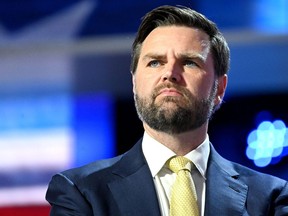
Vance Sharply Criticizes China, More Critical Than Trump
J.D. Vance, Donald Trump’s Pick for Vice President, Presents a Tough Stance on China
Republican presidential candidate Donald Trump’s selection of J.D. Vance as his running mate is generating significant attention, largely due to Vance’s markedly firm and, at times critical, position regarding China. This approach diverges from some of the more nuanced viewpoints offered by the Trump campaign regarding the world’s second-largest economy. Vance’s explicit criticisms and proposed policies signal a campaign likely to prioritize a more confrontational stance on numerous issues related to Beijing, potentially reshaping the economic and geopolitical landscape should Trump secure the presidency.
The core of Vance’s concerns regarding China stems from a consistent, and often direct, articulation of several key issues. He has repeatedly expressed a desire to address what he perceives as a significant threat posed by China, articulated by a belief that the nation has “stolen a lot of American jobs,” and a conviction that the United States is not adequately safeguarding its interests. Vance’s views are particularly evident in his proposals concerning military capacity, trade tariffs, globalization, financial markets, cybersecurity, and technological innovation.
One of Vance’s most prominent arguments centers on the need to prioritize preventing a Chinese invasion of Taiwan. He considers this a top concern, highlighting the potential catastrophic consequences for the U.S. economy and the island’s crucial role in global semiconductor production. Vance’s stance, as reported in a speech at the Heritage Foundation last year, emphasizes the necessity of bolstering Taiwan’s defenses significantly. He argued that a Chinese invasion would “decimate our entire economy" and prompted a call for a fundamental shift in U.S. foreign policy. Contrasting this view with recent comments made by Donald Trump regarding the prospect of standing up to Chinese aggression, Vance’s position signifies a considerably more forceful approach to the issue.
Beyond Taiwan, Vance has advocated for broad tariffs on Chinese imports, going beyond the existing tariffs on solar panels and electric vehicles. He argues that these measures are essential for protecting American industries from unfair competition and bolstering domestic manufacturing, a sentiment that he’s voiced both on CBS’s “Face the Nation” and in a letter to the Cybersecurity & Infrastructure Security Agency (CISA) concerning the Chinese hacking group, Volt Typhoon. Specifically, Vance has expressed concerns about Volt Typhoon’s potential to target U.S. tech infrastructure, fearing the consequences of a successful attack on critical American systems. His warning, detailed in a letter he sent to CISA in May, further underscored the level of threat he perceives from Chinese cyber activity.
Vance’s approach to globalization is similarly critical. He argues that the decades-long project of “liberalizing” countries like China through trade has been a failure, and that a “rethink” of this strategy is necessary. This perspective aligns with a belief that the goal of making China more like the U.S. has not materialized, pushing him toward a more protectionist and self-reliant economic policy. Furthermore, Vance has voiced worries about American companies offshoring production to China, stating that it’s creating a “really bad deal” for American consumers and technologists. He underscores the importance of maintaining technological innovation while also safeguarding national security by preventing the transfer of expertise and infrastructure to China.
Finally, Vance has directly addressed concerns surrounding America’s financial markets, advocating for restrictions on China’s access to U.S. financial systems, particularly if Beijing violates trade and commerce laws. His argument reflects a desire to hold China accountable for alleged illegal currency manipulation and to protect American workers in Ohio and across the manufacturing sector. Recognizing the potential consequences of a continued trade imbalance with the Chinese Communist Party, Vance’s position signifies a clear demand for a more assertive and legally-driven strategy in the relationship between the two nations.
