
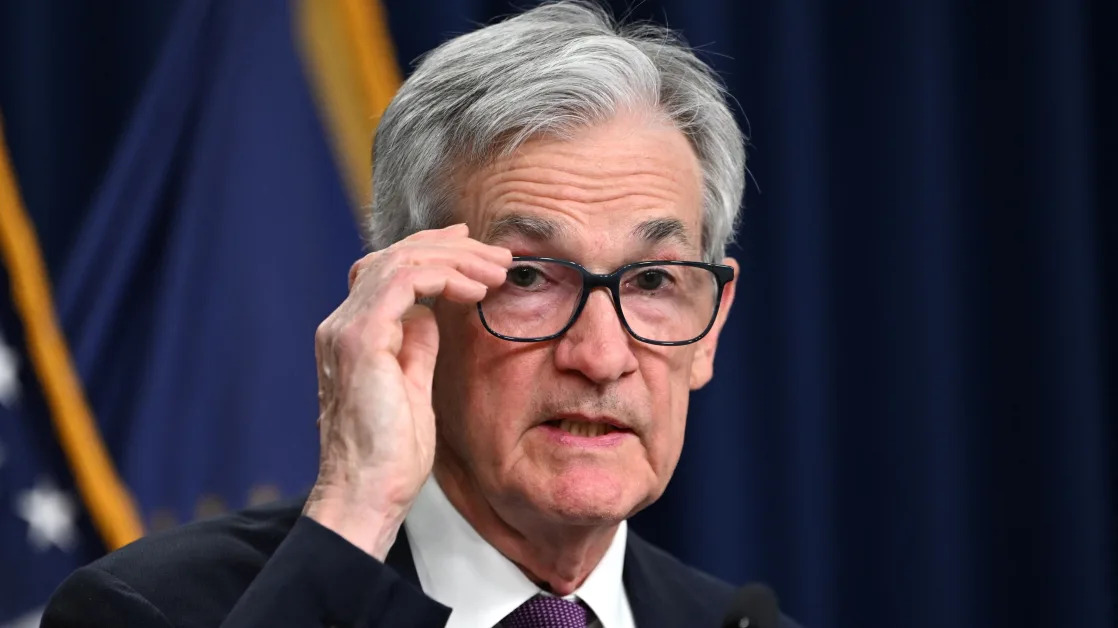
Donald Trump loves to use the stock market as a scoreboard. Interest rates will be the judge of that.
Donald Trump
famously helped measure
the success of his time in office using the stock market.
But in the first year of his second term, Trump may have little control over
what’s expected to be the key market driver of the next year
: interest rates.
Since Trump was elected on Nov. 5, the 10-year Treasury yield (
^TNX
) has risen about 40 basis points as markets have priced in fewer interest rate cuts from the Federal Reserve amid fears inflation won’t fall quickly to the central bank’s 2% target.
At just shy of 4.8%, the yield is at its highest level since late April 2024 and above levels where strategists believe higher rates weigh on investor’s willingness to buy stocks. Similar
increases in rates in April 2024
and
the fall of 2023
coincided with some of the largest stock market declines of the current bull market.
For example, the last time the 10-year climbed near 5% in the fall of 2023, the S&P 500 (
^GSPC
)
fell for three straight months
, with the benchmark index declining as much as 10% over the period.
“The correlation of equity returns to bond yields has flipped decisively into negative territory (yields up, stocks down, and vice versa) — something we have not seen since last summer,” Morgan Stanley chief investment officer Mike Wilson wrote in a note to clients on Jan. 5.
Given this correlation of stocks falling when rates rise, Wilson argued rates are ”
the most important variable to watch in 2025
.”
The trouble for Trump is that the president-elect can’t do much to influence rates lower.
In fact, many of his policies, at least when they’re talked about in public, have had an adverse effect. Take
the market action seen on Jan. 6
, for instance. When Trump
denied a report from the Washington Post
that his tariff plans may not be as widespread as initially thought, yields spiked higher and reversed an earlier decline.
A key fear among many market participants is that
tariffs could prove inflationary
at a time when inflation is already struggling to fall toward the Fed’s 2% target. And the central bank has
already begun discussing how Trump’s policies
could affect the question of whether or not to cut interest rates further in 2025.
Almost all Federal Reserve officials agreed in their last meeting that “upside risks to the inflation outlook had increased” due in part to the “likely effects” of expected changes in
trade and immigration policies
, according to
minutes
from the Fed’s Dec. 18 meeting.
Fidelity Investments director of global macro Jurrien Timmer told Yahoo Finance his “main fear” is the “inflation genie was never quite put back in the bottle.”
“If the economy really accelerates without the inflation dragon having been completely slayed, we could see inflation, which is currently in the high twos, go back into the threes and maybe three and a half or four [percent range],” Timmer said. “It’s not a prediction, but that’s a scenario that would, I would think prevent the Fed from cutting rates further.”
Given that the Fed is an independent body, Trump can’t directly order the central bank to cut interest rates, which could help take the pressure off rising bond yields.
And Fed Chair Jerome Powell has made clear that
he won’t be taking directives
from the incoming president.
Read more:
How much control does the president have over the Fed and interest rates?
This leaves the rise in rates, which
strategists have dubbed a “systemic problem” for equities
, up to the markets, which will continue speculating on what the Fed could do next.
Many
believe
a batch of softer economic data could be what finally takes rates off the boil. Piper Sandler chief investment strategist Michael Kantrowitz said in a recent video to clients that this narrative shift from the rising rate environment could help “get equities going once again.”
For now, though, that hasn’t come, as
a strong December employment report
sent rates higher and
stocks lower
as investors
grew more confident
the Fed won’t need to cut interest rates to help an ailing economy.
Josh Schafer is a reporter for Yahoo Finance. Follow him on X
@_joshschafer
.
