
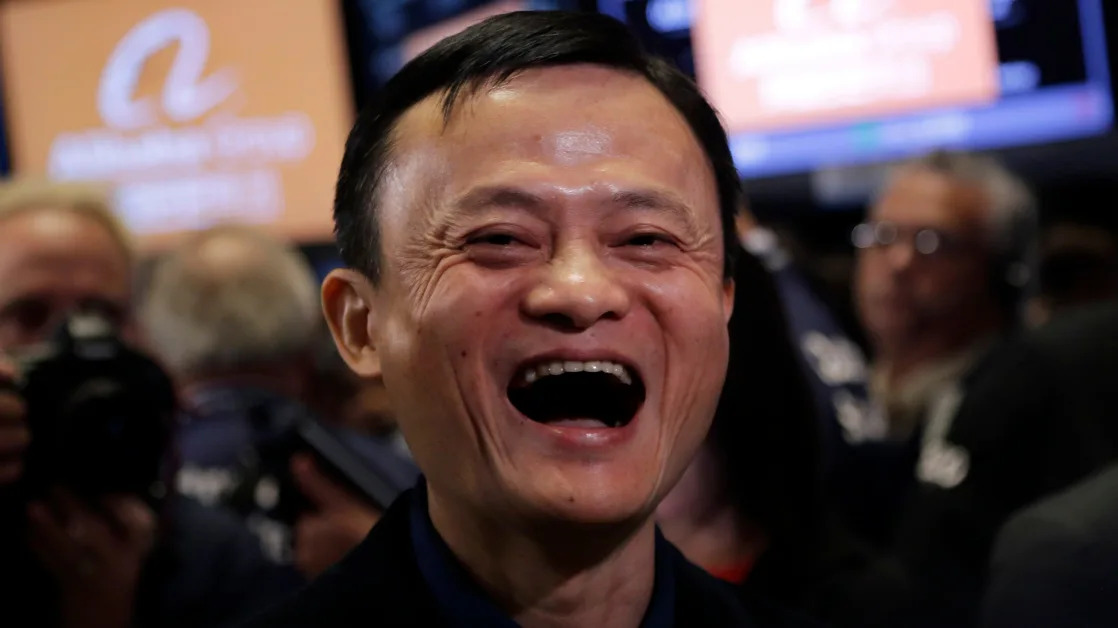
Downtrodden Alibaba stocks surge over 30% this year on AI hype

Once the most high-profile name in Chinese tech, Alibaba had several difficult years in the stock market — but the e-commerce giant could be headed for a turnaround.
On Wednesday, Alibaba shares in Hong Kong climbed over 8% after
The Information
reported that it’s working with Apple to roll out AI features for iPhones in China. Neither company responded to requests for comment from Business Insider.
The surge in Alibaba shares sent Hong Kong’s
Hang Seng Index
closing 2.6% higher on Wednesday. The index is up 9% year-to-date.
The Hang Seng Tech Index closed 2.6% higher. It is 18% higher this year-to-date thanks to a sector-wide
boost
from DeepSeek.
The stock of tech giant Alibaba — whose shares had been beaten down since Beijing’s yearslong
Big Tech regulatory crackdown
— has soared 38% this year so far in Hong Kong. The stock’s dual listing on the New York Stock Exchange is up 33%.
Alibaba
shares on the NYSE closed 1.3% higher, at $112.78 apiece, on Tuesday — about two-thirds lower than its peak of around $310 in October 2020. This was when co-founder
Jack Ma’s
criticism of China’s financial regulatory system angered Beijing, triggering a crackdown on his tech empire. High-profile Ma also disappeared from public view.
Alibaba is still trading far higher than a recent low of around $64 in October 2022.
The company’s stock rally this year predates the news about its potential partnership with Apple.
On January 29, Alibaba released a new version of its Qwen 2.5 AI model, joining the hype in China AI tech amid the meteoric rise of
DeepSeek.
Chinese AI models present serious challenges to the capital-intensive development that has long been dominated by Western firms, Dilin Wu, a research strategist at brokerage Pepperstone, told Business Insider.
She said Trump’s tariffs on Chinese goods could still put short-term pressure on China tech firms that would need to speed up their Southeast Asia expansion to sidestep mounting trade barriers.
The Chinese market also continues to be dogged by a prolonged economic downturn.
“Deflationary pressure, weak consumer sentiment, and the ongoing real estate slump remain headwinds. A short-term rally driven by policy headlines won’t be enough — sustained gains will require real economic support,” said Wu, who flagged the Chinese Communist Party’s National People’s Congress on March 5 as a date to watch for potential stimulus news.
Outlook for China stocks could be improving
The current rally in
Chinese stocks
contrasts with the market’s shaky start coming into 2025. The first weeks of trading reversed a rally in late 2024 after Beijing boosted
stimulus measures
to shore up its flagging economy.
In September, billionaire investor
David Tepper
said it was a buy “everything” moment for Chinese stocks based on what he saw as attractive valuations.
In the fourth quarter, Tepper’s Appaloosa Management raised its stakes in Chinese tech companies Alibaba,
PDD,
and
JD.com
— which made up some of the hedge fund’s biggest holdings, according to a February 10
regulatory filing.
All three stocks are posting double-digit gains this year.
The outlook for China equities could be improving, wrote analysts from Lombard Odier in a note last week.
“The revival of the Chinese tech sector in recent years, from telecom giant
Huawei
to DeepSeek and other contenders, suggests that US tariffs and export restrictions may only buy time in the two nations’ strategic competition,” they wrote.
China’s benchmark
CSI300
closed 1% higher on Wednesday and is 0.4% lower year-to-date. Meanwhile, the MSCI China Index has rebounded about 15% since a low in January.
“US measures have also forced Chinese firms to innovate, and that may have masked some US sectors’ inability to compete without government support,” the Lombard Odier analysts added.
Read the original article on
Business Insider
