
European Defense Stocks Blast Off as Countries Ramp Up Spending Amid US Aid Freeze
US Support for Ukraine Grinds to a Halt as European Leaders Act
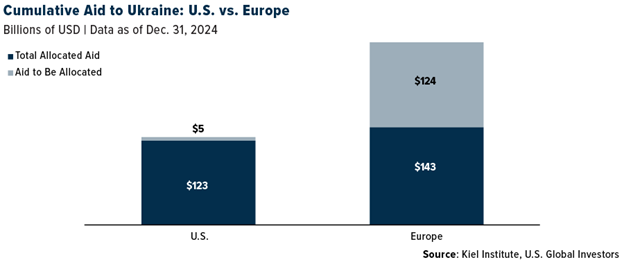
The United States has provided Ukraine with over $120 billion in aid since its conflict with Russia began three years ago, but that support is now coming to an end. The White House has announced that further military aid will be put on hold until President Donald Trump determines that Ukrainian President Volodymyr Zelenskyy is making a "good faith" effort towards peace negotiations with Russia.
This decision has left Ukraine in a precarious position, with western officials estimating that the country can sustain its current rate of fighting until mid-2025 without additional US support. In response to this development, European leaders have taken decisive action by launching an unprecedented military spending spree that is already reshaping global markets.
Germany Takes the Lead in Ramping Up Military Spending
Germany, Europe’s largest economy, has been at the forefront of this effort, with Chancellor-in-waiting Friedrich Merz vowing to do "whatever it takes" to support Ukraine. He has even pledged to amend the German constitution to exempt defense spending from the country’s strict fiscal constraints.
The markets have responded positively to these announcements, with German equities rallying and the DAX Index increasing by over 22% so far this year compared to a loss of over 2% for the S&P 500. The euro has also rebounded from recent lows, erasing its losses since November’s US presidential election.
EU Unveils $840 Billion Plan to Strengthen Defense
Other European nations are following Germany’s lead by increasing their military spending. France’s President Emmanuel Macron delivered a stark warning on Wednesday declaring that Europe must be prepared to defend Ukraine without US support. He made it clear that abandoning Ukraine now would embolden Moscow and threaten France and Europe.
The Czech government has announced plans to raise its defense budget to 3% of GDP by 2030, up from the current 2%. Brussels has responded with an unprecedented $840 billion plan to boost military readiness across the continent. This plan will reportedly involve direct national spending, as EU leaders have agreed to temporarily lift fiscal rules limiting government deficits.
Additional funds will be made available in the form of loans to governments looking to modernize their defense industries. An analysis by European research firms Bruegel and Kiel estimates that for Europe to establish a truly independent military deterrent against Russia, it will require at least 250 billion euros in annual defense spending.
Consequences of this Arms Race
This wave of spending has fueled a blistering rally in European defense stocks as investors bet on long-term demand for military hardware. Defense companies have been among the best-performing stocks globally this year. Italy’s Leonardo SpA and France’s Thales, Britain’s BAE Systems PLC and Germany’s Rheinmetall AG are among those experiencing significant gains.
European Arms Manufacturers See Record Gains
This increase in defense spending is not isolated to Europe. China has announced a 7.2% increase in military spending this year as it continues its efforts to expand its influence in the Pacific. Taiwan is under increasing pressure to boost its defense budget to deter a potential invasion from Beijing. Japan, too, has been urged to increase its military spending.
China Expands Defense Budget as Tensions Rise
The arms race is far-reaching and not confined to the West. China’s announcement follows Washington shuffling resources inward, changing the post-World War II security order and leaving Europe increasingly responsible for its own defense.
As investors navigate these changing circumstances, they are taking notice of European leaders acting decisively in response to US retrenchment from Eastern Europe.
Conclusion
The consequences of this are already playing out in financial markets. For investors, I believe this is not just a short-term trend but a transformation of the global defense landscape. As history has shown, when nations prioritize military spending, market follows.
