
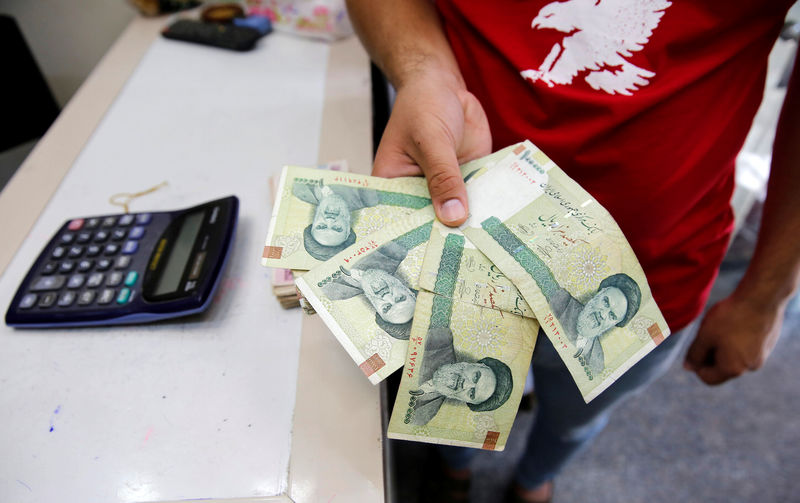
Iran’s Central Bank Gains Power to Shield Rial from Collapsing Currency Market
Iran Authorizes Central Bank to Intervene in Foreign Exchange Market Amid Record-Low Rial
The Iranian government has taken a significant step to stabilize the country’s economy by authorizing its central bank to intervene in the foreign exchange market. This move comes as the rial continues to plummet due to US sanctions and economic hardships.
According to a report from state television, the top government body, composed of President Hassan Rouhani, parliament, and the judiciary heads, has granted the central bank governor the necessary authority to manage the foreign exchange market. The central bank will now be able to intervene through banks and authorized exchange shops to regulate the exchange rate of hard currencies.
This intervention is expected to mitigate the impact of US sanctions on Iran’s economy, which have led to a severe shortage of dollars in the country. With the sanctions set to take effect next month, targeting Iran’s oil industry, many Iranians are concerned about their livelihoods and investments. The government has recognized the urgency of addressing these issues.
As part of its efforts to stabilize the economy, the central bank will announce the exchange rate at an appropriate time, according to state TV. However, it is unclear whether this announcement signals a return to a policy abandoned in recent months, where the government injects hard currencies into the market.
The rial has experienced significant losses, with Iranian oil revenues declining sharply since the re-imposition of US sanctions. To combat inflation and stabilize prices, officials have announced additional measures allowing money exchange shops to import foreign currency banknotes, as well as requiring non-oil exporters to repatriate their earnings within three months.
To ensure liquidity in the market, the government is implementing new regulations on imports, making it easier for businesses to access hard currencies. Additionally, Iran aims to ease restrictions on trading gold by introducing a secondary market for imported coins and jewelry.
These recent developments and announcements may alleviate some of the economic concerns affecting consumers. For instance, many Iranian families rely heavily on basic goods at subsidized prices, and this stabilization could help address their needs more efficiently.
Understanding the Impact of US Sanctions on Iran’s Economy
The current rial slump has been largely attributed to Washington’s withdrawal from the 2015 nuclear deal, coupled with renewed U.S. sanctions imposed earlier this year. These sanctions have resulted in a significant decrease in oil exports and substantial losses for Iran’s economy.
Iranian President Hassan Rouhani has framed these sanctions as an "economic war" against his country. This characterization resonates strongly among Iranians who are dealing with the harsh realities of inflationary pressure, shortages, and skyrocketing prices of essential goods.
Rouhani’s cabinet has consistently expressed concern about the potential consequences of the US sanctions on Iran’s economy. This move signifies a growing recognition by Iranian authorities of the urgent need for stability measures in light of the emerging economic reality.
Iran has an intricate reliance on exports to ensure liquidity, which places considerable strain on its financial sector. It is reasonable to assume that implementing control over foreign currency flows with these new regulations will ultimately mitigate this ongoing issue by limiting speculative demands from foreign markets and promoting internal savings strategies.
Key Developments in the Foreign Exchange Market
To grasp the depth of Iran’s economic challenges:
-
Rial Slumps: Due to its poor economic situation, difficulties in local banks, and a strong demand for dollars amid growing fears over Iranian oil exports, rial weakened significantly.
- Market Rates: Official rates dropped dramatically due to excessive speculation, coupled with heavy reliance on imported goods for essential commodities.
-
Measures to Restabilize the Economy:
Iranian authorities responded promptly by re-authorizing control measures on foreign exchange and setting up a new plan to regulate hard currencies traded in secondary, regulated markets exclusively available through state-endorsed banks.
