
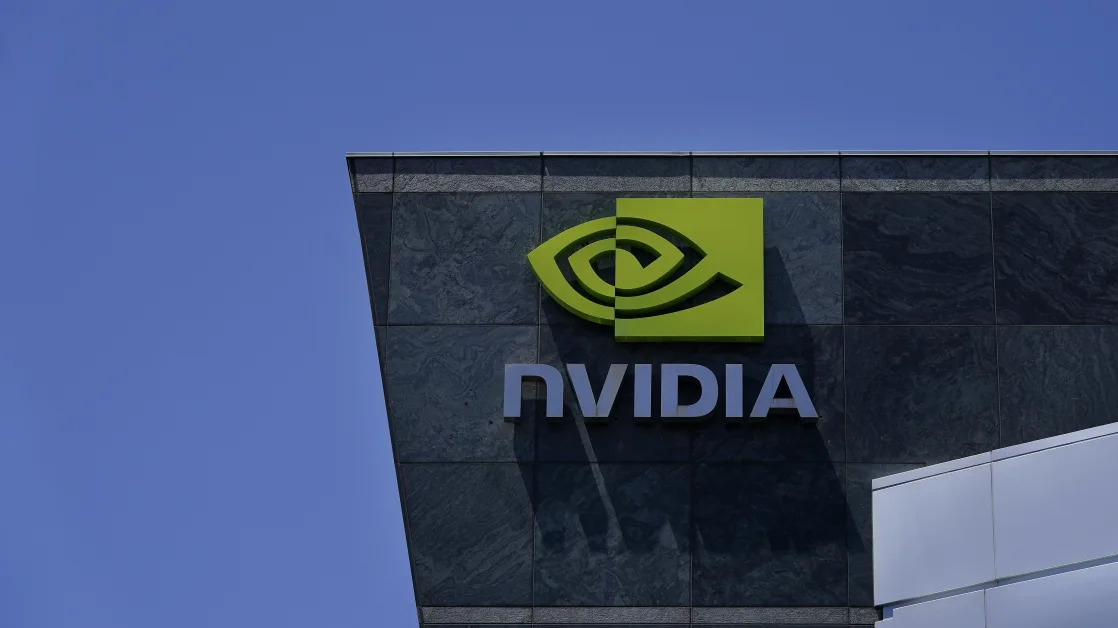
Nvidia stock slides amid AI spending slowdown fears, increased competition
Nvidia (
NVDA
) stock sank more than 2% early Tuesday as investors grew cautious that the AI spending that has fueled its rise could ease or spread to rivals.
Shares of the AI chipmaker were down roughly 14% from its record high closing price of $148.88 in early November.
Nvidia made a swift ascent to the top, from a graphics card company primarily used for video games to the world’s leading supplier of AI chips, as Big Tech goes all-in on generative artificial intelligence. In 2024, it has traded places with Apple (
AAPL
) as the world’s most valuable company, and in early November, it replaced the once-dominant Intel (
INTC
) in the Dow Jones Industrial Average (
^DJI
). Wedbush analyst Dan Ives said in a note last week he expects Nvidia’s market cap to surpass $4 trillion in 2025.
But following its record close in November,
Nvidia shares began to fall after commentary from Microsoft
(
MSFT
)
and Google
(
GOOG
) indicated that their AI spending will grow at a slower pace in the future. Rumors of overheating with its latest Blackwell AI servers stoked fears of further delays to the production ramp up,
sending shares down even more
. Even Nvidia’s most recent
blowout earnings report
, which surpassed
bullish analysts’ already-high expectations
, did little to help the stock’s trajectory.

Adding to Nvidia’s troubles, China’s competition authority last week said it has
launched an antitrust probe
into Nvidia’s $7 billion acquisition of networking technology company Mellanox.
Meanwhile, the competition is heating up. Amazon (
AMZN
) in early December said it’s building a supercomputer with its new servers and its own Trainium AI chips — which
it’s hoping can become a viable alternative to Nvidia
. Broadcom (
AVGO
) said in its most recent earnings report that deals with hyperscalers to supply
its custom AI chips called XPUs will bring in as much as $90 billion
over the next three years — sending the stock soaring and Nvidia’s in the opposite direction, despite analyst commentary that
Broadcom’s success won’t come at Nvidia’s expense
.
Also on Tuesday, the PHLX Semiconductor Index (
^SOX
), which includes Nvidia and other chipmakers’ stocks, dipped nearly 2%.
Big Tech companies’ AI bills are still climbing to massive sums despite concerns
that companies have yet to see a meaningful return on their investments
. Microsoft’s capital expenditures nearly doubled from the year-ago period to $20 billion in its most recent quarterly report, while Meta’s (
META
) expenses rose 36% to $9.2 billion over the same period. Google’s capital expenditures jumped 63% to $13 billion. At the same time, only 4% of US workers actually use AI daily, according to
a recent Gallup poll cited by Bloomberg
.
While JPMorgan (
JPM
) analyst Samik Chatterjee said in a note to investors Monday that fears of a slowdown in AI spending “appear to be unfounded” but acknowledged that “2024 was likely the peak in terms of the percentage increase.” While the biggest hyperscalers’ spending on AI-related infrastructure rose 57% in 2024, it will likely rise 30% in 2025 and 25% in 2026, Chatterjee estimates.
