
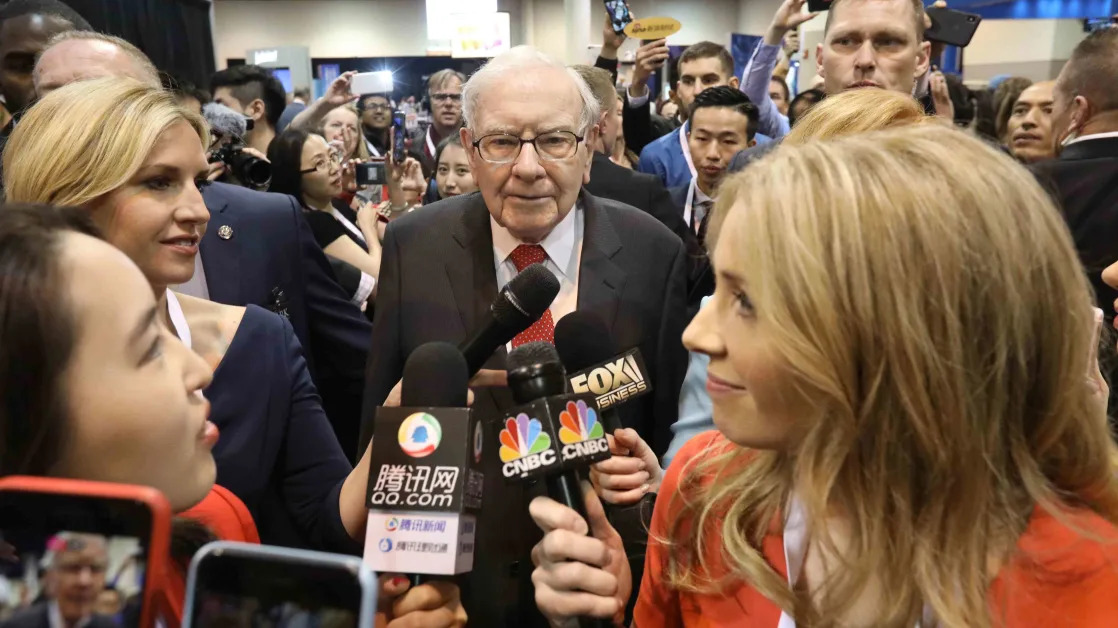
Stock Market At Levels That Warren Buffett Once Called ‘Playing With Fire’

Key Takeaways
Stocks are trading at record highs, and that could be cause for concern if you follow a valuation measure once favored by one of the world’s most famous investors:
Warren Buffett
.
America’s market capitalization-to-GDP ratio, or so-called
Buffett Indicator
, is hovering around 200%, a level that Buffett compared to “playing with fire” in a 2001 article for
Fortune
.
Due to the difficulty of determining the value of the entire U.S. stock market, calculations of the ratio vary. Some put the figure at 208% at the end of the third quarter. An
Investopedia
calculation, using GDP figures from the Bureau of Economic Analysis and market cap data from securities industry trade group SIFMA, puts it slightly below 200%.
Regardless, the ratio is at a level that two decades ago Buffett called concerning. “Nearly two years ago the ratio rose to an unprecedented level,” he wrote in 2001, referring to the
dotcom bubble
. “That should have been a very strong warning signal.”
The inflated value of the market is a potential explanation for why Buffett’s Berkshire Hathaway (
BRK.A
;
BRK.B
) has been
selling stock in recent months
and growing its cash pile.
What Is the Buffett Indicator?
Buffett in 2001 was technically referring to a comparison of the stock market’s total value and U.S.
gross national product
(GNP), a measure of economic activity that is
slightly different
from the more widely cited
gross domestic product
(GDP). Today, as has historically been the case, the difference between the two is small—just $15 billion, or 0.05% of GDP.
Buffett acknowledged that the ratio “has certain limitations.” Still, he called it “probably the best single measure of where valuations stand at any given moment.”
The indicator was last around the 70% to 80% level, which Buffett in 2001 said was likely a good entry point to the stock market, in 2010 and 2011 when stocks were recovering from the 2008 crash.
What Is Buffett Doing With Stocks?
Buffett’s Berkshire Hathaway has increased its cash reserves to record levels by
selling more stock than it has bought
, notably in some of its largest positions like Apple (
AAPL
) and Bank of America (
BAC
), in recent quarters.
The firm’s
more than $320 billion in cash
and equivalents on hand and streak of selling stock suggest Buffett could be hesitant about putting more money into a seemingly overvalued market, or be the groundwork for potential acquisitions. Buffett has said previously Berkshire would be open to such deals, and that much cash would allow Berkshire to buy all but about 25 of the most valuable companies in the U.S., the
Wall Street Journal
reported recently.
However,
Bloomberg
columnist Nir Kaissar wrote recently that based on Buffett’s track record of favoring the long view, pulling cash out of the market is likely indicative of his belief that the long-term returns of the market are less than ideal, rather than a prediction of an imminent downturn.
Read the original article on
Investopedia
