
US Housing Market Showdown: Prices Slip as Sales Flatten Against Soaring Interest Rates
New Housing Market Data: Moderation Continues, Homeownership Remains Elusive
The latest housing market data has confirmed the moderation trend that began in the second half of 2024. The combination of high mortgage rates and prices, along with inventory constraints and falling consumer sentiment, continues to make homeownership unattainable for many.
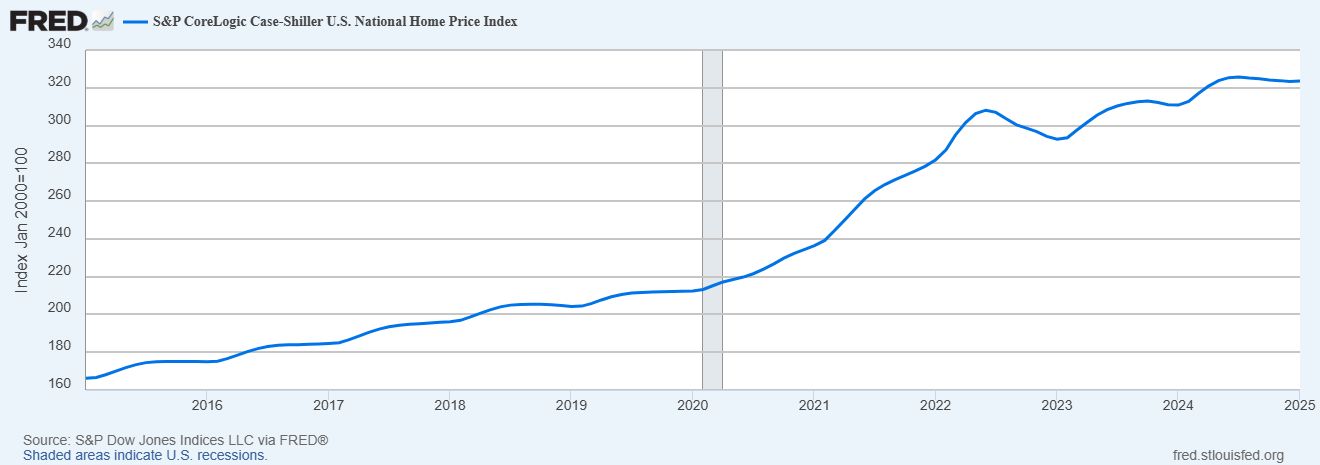
January Case-Shiller National Home Price Index Sees First Increase Since August
The Case-Shiller national home price index increased by +0.1% in January for the first time in five months, marking a significant milestone in the moderation of housing prices. However, it’s essential to note that this increase is only 4.1% above January 2024 levels and not a return to pre-moderation levels. The index peaked in July 2024 and has since declined by 0.7% from those levels.
Regional Split: Home Price Gains Disaggregated
When examining the January data, it’s clear that regional trends continue to diverge. Only 9 out of the 20 major cities saw home price gains during this period. On one end of the spectrum are LA (+0.5%) and Chicago (+0.5%), which outperformed, while Tampa (-0.6%) and Dallas (-0.5%) lagged behind.
Long-Term Outlook: Continued Price Increases in Most Cities
Looking at the 12 months ending in January, a more comprehensive picture emerges. Nineteen out of twenty major cities saw price increases during this period. New York (+7.8%) and Chicago (+7.5%) emerged as top performers, followed closely by San Francisco and Boston. Tampa (-1.5%), however, was the lone decliner.
New Home Sales Maintain Flat Trend
February new home sales came in at an annualized rate of 676K (682K expected), essentially flat for the last two years. The South (+27K) and Mid-West (+13K) regions experienced gains, while the Northeast (-6K) and West (-22K) saw declines.
New Housing Inventory Continues to Normalize
The median sales price for new houses sold decreased from $460,300 in October 2022 to $414,500 in February. A more subtle yet equally relevant metric is the monthly supply of new homes for sale, which ticked down from 9 in January to 8.9 in February.
Regional Breakdown: Continuing Shifts
The current regional trends continue to paint a picture of an evolving housing market. The South and Mid-West are experiencing relative stability, while the Northeast and West are suffering setbacks. Meanwhile, areas like LA, Chicago, and Miami continue to defy expectations with remarkable growth.
Implications and Takeaways from New Housing Data
These results underscore ongoing issues in the new housing market: moderation continues its stranglehold on prices and inventory constraints remain a pressing concern for potential buyers and sellers alike. The persistent gap between demand and supply is also fueling decreased consumer confidence, making homeownership more difficult to achieve.
Market Trends Shape Local Policy Decisions
It’s essential for policymakers to keep these trends in mind when shaping their long-term strategies, ensuring the creation of sustainable market solutions that work towards stabilizing housing prices. This approach will help curb speculation and support healthy inventory growth, creating more accessible pathways for prospective homeowners.
Stability is Key as Moderation Continues
To mitigate future destabilization and maintain momentum, a balanced approach to policy formulation can help alleviate concerns around overspeculation and scarcity-driven price growth. Only through collaborative efforts among policymakers, financial analysts, and real estate professionals can we create harmonious relationships between government regulation, economic conditions, and shifting housing market demands.
Unsustainable Market Sentiment
Falling consumer sentiment has led many to question long-term affordability in this market. Uncertainty and lack of confidence threaten to prolong downward trends in the new construction sector, creating challenges for potential builders and developers alike.
Market Dynamics Suggest Volatility Ahead
As prices continue their gradual downward trend and affordability concerns plague consumers, ongoing volatility cannot be overlooked. These fluctuations are likely to impact regional market dynamics further, forcing all stakeholders involved – including policymakers, industry participants, and individual investors – to revisit existing positions in the face of evolving housing realities.
Conclusion
In examining these new data releases and broader trends emanating from them, it is clear: moderation persists across the board. Housing prices are trending downward; supply levels continue their gradual descent; affordability constraints prevail, while consumer sentiment plummets amidst lingering concerns around speculation-driven growth.
